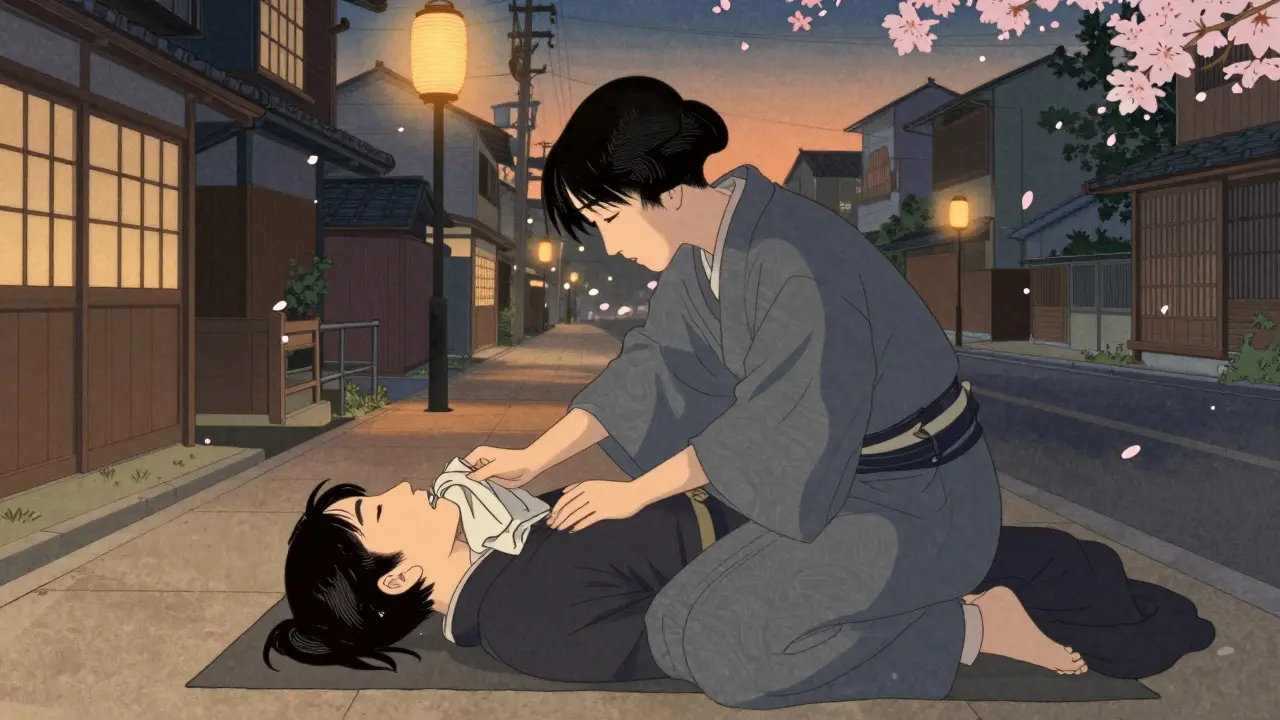
When someone overdoses, every second counts. It’s not about being a medic or having a medical degree-it’s about knowing what to do before the ambulance arrives. In New Zealand, as in many places, opioid overdoses are rising, and fentanyl is now a major player. But here’s the truth: overdose response isn’t about waiting for someone to wake up. It’s about acting fast, staying calm, and doing the right things in the right order.
Step 1: Check Responsiveness and Breathing
Don’t shake them or shout. That wastes time. Instead, tap their shoulder firmly and say, "Are you okay?" If there’s no response, check their breathing immediately. Look at their chest. Listen near their nose and mouth. Feel for air on your cheek. You have 10 seconds to decide.If they’re not breathing or only gasping-like a snore or a weird wheeze-that’s not normal sleep. That’s an overdose. Gasping means their brain is starving for oxygen. Every minute without oxygen increases the chance of brain damage. Don’t wait. Don’t hope. Act.
Step 2: Call for Help Immediately
Dial 111. Even if you have naloxone. Even if you think they’ll wake up. Emergency services need to know where you are, what happened, and what drugs might be involved. The operator can guide you while you wait. In Auckland, ambulances typically arrive in 8-12 minutes. That’s longer than the 4-6 minute window your brain can survive without oxygen. So while you’re waiting, you become their lifeline.Don’t hang up. Stay on the line. Tell them if you think it’s opioids, alcohol, or stimulants like meth or MDMA. This helps them prepare the right treatment before they even get there.
Step 3: Give Rescue Breathing
If they’re not breathing but still have a pulse, you don’t need chest compressions. You need breaths. This is critical. Most overdose deaths happen because breathing stops first. The heart follows later.Open their airway by tilting their head back gently and lifting their chin. Pinch their nose shut. Cover their mouth with yours, making a tight seal. Give one breath every 5-6 seconds. Each breath should last about 1 second. Watch their chest rise. If it doesn’t, reposition their head. If you can’t make a seal, try using a cloth or shirt to cover their mouth while you breathe into it-better than nothing.
Keep going. Don’t stop after two or three breaths. People think naloxone will fix everything. But it can take 2-5 minutes to work. You might be giving breaths for 10 minutes or more. Muscle fatigue is real. If you’re tired, switch with someone else. If you’re alone, keep going. Your breaths are keeping their brain alive.
Step 4: Use Naloxone If Available
Naloxone reverses opioid overdoses. That includes heroin, fentanyl, oxycodone, codeine, and methadone. It does nothing for alcohol, benzodiazepines, cocaine, or meth. If you’re unsure, give it anyway. If it’s not opioids, it won’t hurt them. If it is, it could save their life.Most naloxone kits in New Zealand are nasal sprays. Tilt their head back. Spray half the dose (one spray) into one nostril. If you have a second spray, use it in the other nostril. Don’t wait to see if it’s working. Give it now.
Even after naloxone, keep giving rescue breaths. Naloxone wears off in 30-90 minutes. Opioids like fentanyl can last longer. They can stop breathing again. You must keep monitoring them until help arrives.

Step 5: Put Them in the Recovery Position
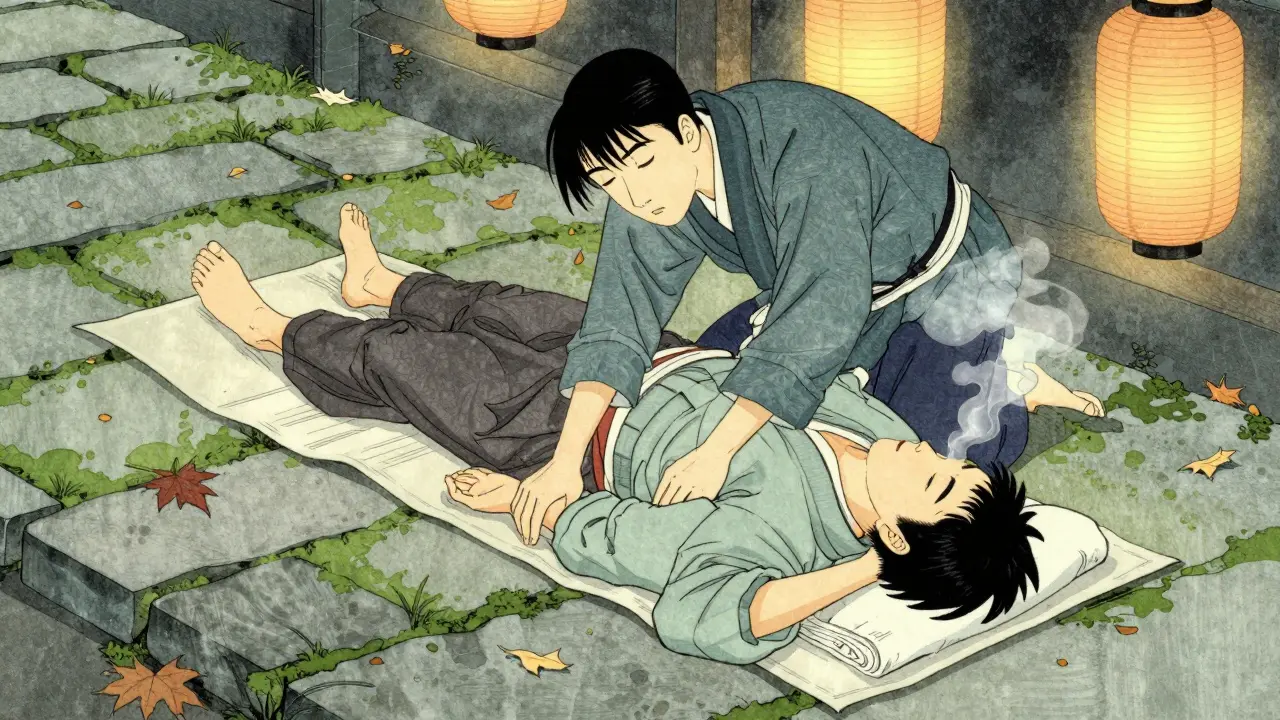
If they start breathing on their own but are still unconscious, roll them onto their left side. This is the recovery position. It keeps their airway open and prevents choking if they vomit.Here’s how: Kneel beside them. Straighten their legs. Bend their far leg at the knee. Place their far arm under their head. Gently roll them toward you, using the bent leg as a pivot. Their head should rest on their arm, mouth slightly downward. Their top arm should be out in front, bent at the elbow. Their bottom arm should be under their body. Their top leg should be bent at 90 degrees to keep them stable.
Check their breathing every 2-3 minutes. If they stop again, go back to rescue breathing. Don’t leave them alone. Don’t assume they’re fine just because they’re breathing now.
What Not to Do
Don’t put them in a cold shower or ice bath. That’s a myth. Cold shocks can trigger dangerous heart rhythms, especially with stimulant overdoses like MDMA or cocaine.
Don’t give them coffee, water, or food. You can’t sober someone up. Water might cause choking. Coffee won’t help. Let medical staff handle fluids.
Don’t leave them to sleep it off. People die this way every year. Overdose unconsciousness looks like deep sleep. But their body isn’t resting-it’s shutting down.
Don’t wait to see if they improve. If you’re unsure, treat it like an overdose. Better to act and be wrong than to wait and lose someone.
What If It’s Not Opioids?
Most overdoses are opioids-but not all. If it’s alcohol, the biggest danger is choking. Keep them on their side. Watch for vomiting. Don’t let them lie flat.
If it’s stimulants like meth or MDMA, they might be hot, agitated, or having seizures. Keep them cool-not cold. Remove excess clothing. Fan them gently. Don’t restrain them unless they’re in danger of hurting themselves. Call for help. Don’t try to calm them with force.
If it’s a mix of drugs-common now-treat it like an opioid overdose. Give naloxone anyway. Use rescue breathing. Call 111. Polysubstance overdoses are the new norm. The rules haven’t changed: breathe for them, get help, keep monitoring.
Why This Works
Studies show bystander intervention cuts overdose deaths by nearly half. In communities where people are trained in these steps, survival rates jump to 98%. In places where people only carry naloxone but don’t know how to breathe for someone, survival drops to 87%.
The reason? Rescue breathing keeps oxygen flowing. Naloxone reverses the opioid. But without breath, neither matters. You’re not just giving a shot-you’re keeping their body alive until professionals take over.
Preparing Ahead of Time
Keep a naloxone kit in your car, bag, or home. They’re free in many community health centers in Auckland. Ask at your local pharmacy or district health board. Practice the recovery position with a friend. Watch a 10-minute video on the Health New Zealand website.
Teach your housemates, your partner, your friends. Overdose doesn’t happen to "other people." It happens to people you know. Someone you care about might need you to act tomorrow.
After It’s Over
Even if they wake up, they still need to go to the hospital. Naloxone wears off. The drug can come back. They might have internal damage. Don’t let them talk you out of it.
You might feel shaken, guilty, or relieved. That’s normal. Talk to someone. Call a helpline. You did something brave. You saved a life.
Can I give naloxone to someone who didn’t take opioids?
Yes. Naloxone is safe for anyone, even if they didn’t take opioids. It only works on opioid receptors, so if there are no opioids in their system, it does nothing. It won’t hurt them. If you’re unsure whether it’s an opioid overdose, give it anyway. The risk of not giving it is far greater.
How long does it take for naloxone to work?
Naloxone usually starts working in 2-5 minutes. But it can take longer with strong opioids like fentanyl. Don’t stop rescue breathing just because you gave it. Keep breathing for them until help arrives or they start breathing on their own. Naloxone’s effect lasts only 30-90 minutes, but the drug they took might last longer.
What if I’m afraid to call 111?
You’re not alone. Many people fear legal trouble or judgment. But in New Zealand, Good Samaritan laws protect you if you call for help during an overdose. You won’t get in trouble for calling. The priority is saving a life. Emergency responders are trained to help, not punish. Calling 111 is the single most important thing you can do.
Can I use a cloth or towel to give rescue breathing if I’m uncomfortable with mouth-to-mouth?
Yes. If you’re not comfortable giving direct mouth-to-mouth, use a cloth, shirt, or even a face shield if you have one. Place it over their mouth and nose. Breathe into it. It’s not ideal, but it’s better than doing nothing. The goal is to get air into their lungs. Any method that helps them breathe counts.
What if I don’t know how to do the recovery position?
If you’re unsure, just roll them onto their side as gently as you can. Bend the top leg, tilt the head back slightly, and let their arm rest under their head. It doesn’t have to be perfect. The goal is to keep their airway clear and prevent choking. Even a rough recovery position is better than leaving them on their back.
Is it true that naloxone doesn’t work on fentanyl?
No, that’s not true. Naloxone works on fentanyl-but fentanyl is so strong that you might need more than one dose. If the person doesn’t respond after the first nasal spray, give a second one in the other nostril. If they still don’t improve, keep giving rescue breaths and wait for paramedics. Fentanyl overdoses often need multiple doses of naloxone, but it still works.
Can I use naloxone on a child or teenager?
Yes. Naloxone is safe for all ages, including children and teens. The dose is the same regardless of size. If a teenager has overdosed on opioids, give the standard nasal spray. Don’t hesitate. Their life depends on it.
What Comes Next?
After the emergency, the real work begins. Recovery isn’t just about surviving the overdose-it’s about what happens after. If you or someone you know has experienced an overdose, talk to a health professional. There are free support services in Auckland that help with addiction, mental health, and harm reduction. You don’t have to go through it alone.
And if you’ve made it this far-you’re already the kind of person who could save a life. Keep learning. Keep sharing. Keep being ready.

Darren Ramowski
My name is Calem Goodridge, and I am a pharmaceutical expert with a passion for educating others about medication and diseases. I have dedicated my career to researching and developing life-changing medical treatments. In my spare time, I enjoy writing articles and sharing my knowledge with the general public to help them make informed healthcare decisions. I am also an advocate for safe medication practices and believe that patient education is key to preventing adverse drug events. With my extensive experience in the pharmaceutical industry, I strive to make a positive impact on the lives of others through my writing.
Just gave naloxone to my cousin last month. He was blue. Didn't even know he was using fentanyl. Breathed for him 8 minutes straight. Paramedics said if I hadn't acted, he'd be dead. That article? Spot on.
They’re not telling you the real reason they push naloxone so hard-big pharma owns the spray, and the government wants you dependent on their solution instead of fixing the root cause. The real epidemic? Poverty, trauma, and broken systems. But sure, let’s just hand out nasal sprays and call it a day.
Y’all don’t get it. This isn’t about overdoses. This is about control. They want you to think you need their medicine, their protocols, their 111 calls. What if the real answer is just… let people feel the consequences? No one dies from opioids unless they’re weak. This whole thing is a scam to make you feel guilty for not being a saint.
Rescue breathing is overrated. If they’re not breathing, they’re already gone. Naloxone is the only thing that matters. Everything else is theater.
Why are we encouraging people to touch strangers’ mouths? This is a public health nightmare waiting to happen. You’re literally risking disease transmission for a 50% chance they’re not just drunk. Someone should sue the health department for this nonsense.
Let’s be real-this whole guide is just a propaganda piece from the harm reduction cult. They don’t care about saving lives. They care about normalizing drug use. You give someone naloxone, you’re not saving them-you’re enabling them to do it again tomorrow. And then the next day. And the next. Until they’re a shell. And you call that compassion?
I tried the recovery position once. Ended up breaking their arm. Now I just leave them on their back. If they choke, it’s their fault for doing drugs. I’m not a paramedic. I’m not responsible for their choices. The article makes me feel guilty for not being a hero.
Back home in Nigeria, we don’t need all this. If someone overdoses, you slap them, scream, pour cold water. If they don’t wake up, you bury them. Simple. No naloxone. No breathing. No 111. We don’t have the luxury of your Western overcomplicated nonsense. Your system is broken because you treat addicts like patients, not failures.
Did you know that the CDC has been quietly funding studies that show naloxone distribution correlates with increased opioid use? It’s not a myth-it’s data. The government knows that handing out free antidotes reduces the fear of using. They’re not trying to save lives-they’re trying to keep the drug economy alive. Why? Because the prison-industrial complex needs bodies. And overdoses? They’re just collateral damage wrapped in a blue ribbon.
While I appreciate the thoroughness of this guide, I must emphasize that the efficacy of rescue breathing in non-hospital settings remains statistically marginal without concurrent advanced airway management. That said, the psychological empowerment of bystanders cannot be underestimated, and the structural recommendation to disseminate naloxone kits aligns with public health best practices as outlined by the WHO in 2021.
Y’all are acting like this is some noble act. It’s not. You’re just doing the bare minimum because the state told you to. You’re not a hero. You’re a compliance drone. And the fact that you think this makes you a good person? That’s the real tragedy.
I read this after my sister almost died last year. I didn’t know what to do. I panicked. I called 111 but didn’t breathe for her because I was scared. This guide? It’s the thing I wish I’d had. I’ve printed it out. Left one at my mom’s house. One in my car. Told my whole family. If you’re reading this and you’re not sure-just do it. Even if you’re scared. Even if you’re not perfect. Just breathe. It’s not about being brave. It’s about being there.
There’s something deeply human in how we’ve turned this into a checklist. We’ve reduced a dying person to steps: check, call, breathe, spray, roll. But behind every step is someone’s son. Someone’s daughter. Someone who just wanted to feel something other than pain. Maybe the real answer isn’t in the protocol-it’s in how we stop seeing them as overdoses and start seeing them as people. Even when they’re broken. Especially when they’re broken.