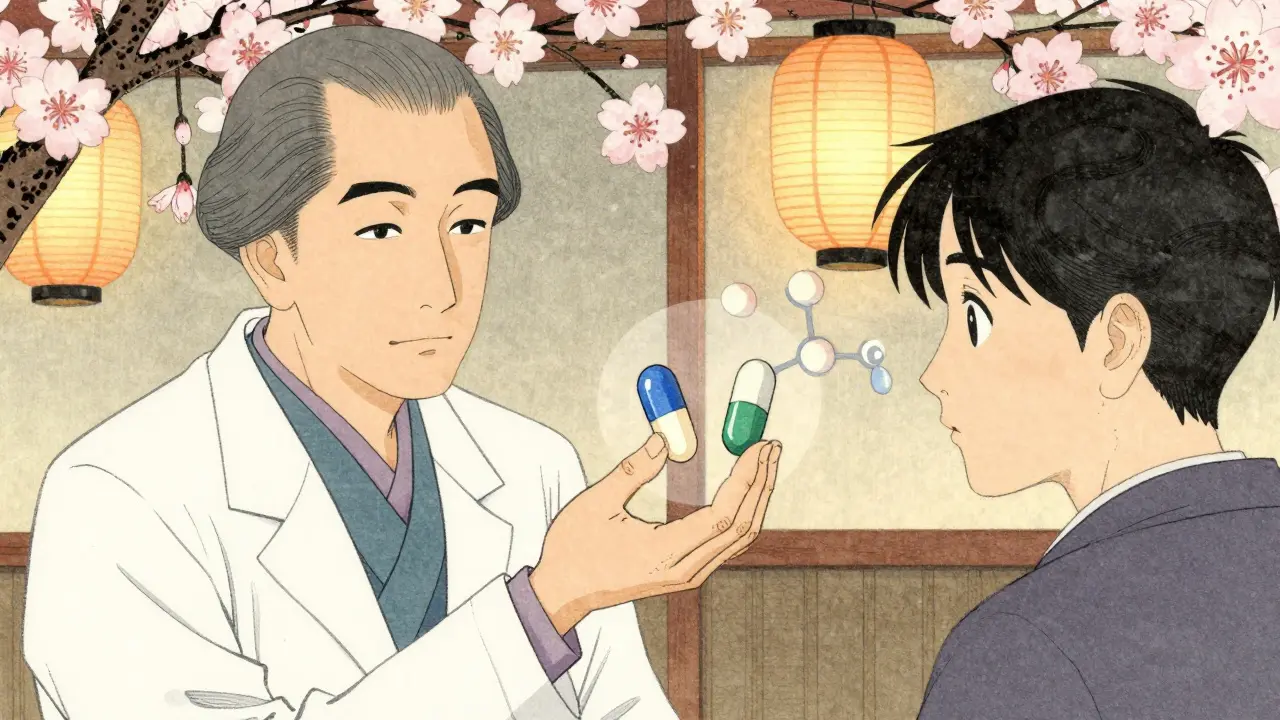
When a patient looks at their new prescription and says, "This doesn’t look right," it’s not just about the pill’s shape or color. It’s about trust. And that’s where pharmacists have the most power - not to argue, but to connect.
One in four patients in the U.S. worry that generic drugs aren’t as strong or safe as brand-name versions. That’s not because they’re irrational. It’s because they’ve been given incomplete or misleading information. And in many cases, they’ve never heard the truth: generics are required by law to deliver the exact same active ingredient as the brand, within a 80-125% range of bioequivalence. That’s not a guess. That’s science. And it’s backed by over 40 years of FDA oversight since the Hatch-Waxman Act.
Why Patients Doubt Generics - And What Actually Matters
Let’s cut through the noise. Patients don’t reject generics because they don’t understand science. They reject them because of experience.
- 78% say pill appearance changes make them nervous - a blue oval turning into a white rectangle feels like a different drug.
- 43% believe generics contain only 80% of the active ingredient - a myth that’s been repeated so often, it’s become gospel.
- 68% of patients say they’d accept a generic if they could see a side-by-side image of the old and new pill.
And here’s the kicker: cost alone doesn’t convince. Saying "It’s cheaper" only increases acceptance by 7%. But saying "This has the same active ingredient, just without the brand-name marketing costs" boosts it by 29%. The difference? You’re not selling a discount. You’re explaining a fact.
The Ask-Tell-Ask Framework That Works
Most pharmacists default to: "This is a generic. It’s safe. Here’s your prescription." That’s not a conversation. That’s a transaction.
The most effective approach? Ask-Tell-Ask.
- Ask: "What are your thoughts about switching to this version?" - Let them speak first. You might hear, "I tried it before and it didn’t work." Or, "My doctor said the brand was better."
- Tell: "The FDA requires that generics match the brand exactly in how the body absorbs the medicine. That means the same active ingredient, same dose, same effect - just without the brand name. Here’s a picture so you can see how similar they are."
- Ask: "Can you tell me in your own words what you understand about this change?"
This method isn’t magic. It’s based on a 2020 study of over 1,200 patients. Those who got Ask-Tell-Ask had a 68% acceptance rate. Those who got the standard pitch? Just 42%.
Personal Endorsement: The Secret Weapon
One of the most powerful tools you have? You.
A 2021 study in the American Journal of Managed Care found that when pharmacists said, "I prescribe this generic for my own family," acceptance jumped by 37 percentage points. Why? Because people trust people - not pamphlets.
You don’t have to say it every time. But when you do - especially with someone who’s hesitant - it changes everything. It shifts the conversation from "Is this safe?" to "If they trust it, maybe I can too."
Timing Is Everything
Waiting until the patient walks up to the counter to explain a switch? You’re already behind.
When patients learn about generic substitution at the time of prescribing, 89% accept it. When they only hear about it at the pharmacy? That drops to 63%. Why? Because once the pill is in hand, doubt sets in. The brain says, "This looks different - something changed."
That’s why collaboration with prescribers matters. A 2022 AMA report found that when doctors mention generics during the visit - "I’m prescribing this generic because it’s just as effective and saves you money" - and the pharmacist follows up, acceptance hits 85%. That’s the sweet spot.
What Not to Say - And Why
Some phrases, even if well-intentioned, backfire.
- "It’s the same drug, just cheaper." - This triggers a subconscious link between "cheap" and "low quality." One study showed trust dropped by 22% when cost was the only reason given.
- "Don’t worry, it’s FDA-approved." - Patients hear "FDA-approved" and think, "So were the opioids." They need context, not buzzwords.
- "Everyone takes generics." - This sounds dismissive. It implies their concern isn’t valid.
Instead, use the VALUE framework:
- Validate: "I get why that looks different - it’s confusing when your pill changes."
- Acknowledge: "It’s normal to feel unsure about switching."
- Listen: Let them finish. Don’t interrupt.
- Understand: "You mentioned your last generic didn’t work - can you tell me more?"
- Educate: "The FDA tests these to make sure they work the same way. Here’s what that means for you."
This approach has a 76% success rate - higher than any other method tested.
Visuals and Tools Make the Difference
Patients don’t need jargon. They need clarity.
The FDA’s new "Generics Smart" toolkit includes 3D pill comparisons, videos showing how bioequivalence is tested, and before-and-after images. One pilot at CVS pharmacies saw a 29% increase in acceptance just by showing patients a side-by-side of their brand and generic pill.
Keep a simple printed chart on your counter: one column for brand name, one for generic, with identical active ingredient listed. Add a photo. Add a line: "Same medicine. Different label. Same results."
And if you have time? Use the teach-back method. Ask: "Can you explain to me why you’re taking this now?" If they can say it in their own words - you’ve won.
When Hesitation Goes Deeper
Some patients say, "I’ve been on this brand for years. It works for me."
Don’t argue. Don’t say, "It’s the same." Say: "Tell me what "works for you" means."
Maybe they mean: "It doesn’t make me dizzy." Or, "I don’t have stomach pain." Or, "My doctor always prescribed it."
Now you’re not talking about generics. You’re talking about their experience. And that’s where real trust is built.
Research from Dr. Michael Cohen at ISMP shows that when you tie the switch to a patient’s personal goal - "Because you said taking three pills a day is hard, this generic lets you take just one" - adherence increases by 41%.
Time Is the Biggest Barrier - But It’s Not Insurmountable
Most pharmacists say they don’t have time. Fair. The average counseling session is under 90 seconds. But here’s the truth: you don’t need more time. You need better structure.
Instead of waiting for questions, make it routine:
- Put a simple script on your counter: "This is your generic version. Same medicine, different look. Want to see how it compares?"
- Use the 30 seconds while they’re waiting for the label to print to show the pill image.
- Train your techs to hand out a one-page fact sheet with the FDA logo and a QR code to the official generic drug page.
And remember - Medicare Part D now reimburses for 10-minute medication therapy management sessions. That’s not just for diabetics or heart patients. It’s for anyone who has questions about their meds. Use it.
The Bigger Picture: Why This Matters
Generics make up 90.9% of all prescriptions in the U.S. - but only 22.9% of spending. That’s $313 billion saved every year. Yet, because of hesitation, patients still pay for brand names they don’t need - costing the system $8.2 billion annually.
And it’s not just money. It’s access. For patients on fixed incomes, a $200 brand-name pill isn’t just expensive - it’s a reason to skip doses. Or stop altogether.
When you help someone understand their generic, you’re not just filling a prescription. You’re helping them stay healthy.
What’s Next? AI, Training, and Policy
The future is here. The NIH is funding AI tools that adapt explanations based on a patient’s belief patterns - whether they’re worried about quality, cost, or side effects. Electronic health records now include automated prompts when a brand is prescribed: "Consider generic. Patient has history of hesitation."
And by 2028, if we get this right, generic use could rise to 94.5% - saving another $47 billion. But that only happens if pharmacists are trained, supported, and given the time to do it right.
Right now, provider training is underfunded by $127 million a year. That’s not a number. That’s 127 million chances to help someone understand their medicine - and take it.
Are generic drugs really as effective as brand-name drugs?
Yes. The FDA requires generics to contain the exact same active ingredient, in the same strength, and work the same way in the body as the brand-name version. They must pass strict bioequivalence testing - meaning they deliver between 80% and 125% of the same amount of medicine into the bloodstream. This isn’t an approximation - it’s a legal requirement backed by decades of data.
Why do generic pills look different?
By law, generics can’t look identical to brand-name drugs - that would violate trademark rules. So manufacturers change the color, shape, or markings. But the active ingredient, dosage, and how it works are identical. Seeing a side-by-side image often helps patients realize the difference is only cosmetic.
Can I switch back to the brand if the generic doesn’t work?
Absolutely. If you feel the generic isn’t working as well, talk to your pharmacist or prescriber. In most cases, it’s not the drug - it’s a placebo effect, or a change in inactive ingredients affecting how you feel. But if there’s a real issue, your provider can switch you back. No judgment. Your safety comes first.
Why do some people say generics didn’t work for them?
Sometimes, it’s not the drug - it’s the switch itself. Changing from one pill to another - even if it’s identical - can trigger anxiety, which affects how you feel. Other times, the inactive ingredients (like fillers) differ slightly and may cause mild side effects in sensitive individuals. Rarely, there’s a manufacturing issue - but that’s why the FDA monitors batches closely. If you’re concerned, ask for a different manufacturer’s version.
Is it safe to take generics made overseas?
Yes. The FDA inspects all manufacturing facilities - whether in the U.S., India, China, or elsewhere - before approving a generic. They follow the same quality standards as U.S.-made drugs. In fact, many brand-name drugs are also made overseas. The country of origin doesn’t determine safety - the FDA inspection does.
How can I help older patients who are skeptical of generics?
Older patients are more likely to hesitate - 38% of those over 65 express concerns. Start by validating their experience: "I know you’ve been on this brand for years - that’s smart." Then show them the pill comparison, use the VALUE framework, and if possible, involve their prescriber. Many seniors trust their doctor more than their pharmacist - so teamwork makes a big difference.
Final Thought: You’re Not Just a Pharmacist. You’re a Trusted Advisor.
Patients don’t need another pamphlet. They need someone who listens, explains clearly, and stands behind their advice. When you do that - even in a few minutes - you don’t just increase generic acceptance. You build trust that lasts far beyond this one prescription.

Darren Ramowski
My name is Calem Goodridge, and I am a pharmaceutical expert with a passion for educating others about medication and diseases. I have dedicated my career to researching and developing life-changing medical treatments. In my spare time, I enjoy writing articles and sharing my knowledge with the general public to help them make informed healthcare decisions. I am also an advocate for safe medication practices and believe that patient education is key to preventing adverse drug events. With my extensive experience in the pharmaceutical industry, I strive to make a positive impact on the lives of others through my writing.
Ugh. Another pharmacist PSA. I've been on generics for 15 years. My blood pressure? Stable. My wallet? Still intact. But every time I see one of these 'educational' posts, I'm reminded how condescending the whole system is. Like I'm some dumb kid who needs a PowerPoint to understand that 'same active ingredient' doesn't mean 'same experience.' I don't need a lecture. I need consistency. And sometimes, that's just not there.
This is spot on. The ask-tell-ask method works because it flips the script. Instead of pushing info, you let the patient lead. I've used this with my own patients and seen acceptance jump. No fluff. Just listening then giving clear facts. And yeah, saying 'I give this to my family'? Game changer. Simple. Human. Effective.
I'm a nurse and I've seen this firsthand. A patient came in crying because her generic made her feel 'different.' She said her husband died on the brand and she couldn't risk it. We showed her the FDA chart, side by side, and she just stared at it for a full minute. Then she said, 'So it's not poison?' I didn't say anything. Just nodded. She took it. That's all it took. Trust isn't in the pill. It's in the silence between words.
In India, generics are the norm. We don't have the luxury of brand names. But here's the thing: we don't need a 10-minute lecture. We need clear labeling. A simple sticker on the bottle: 'Same as [Brand Name] - FDA approved.' That's it. No jargon. No PowerPoint. Just facts. And yes, the ones made in India? Often better quality than some US brands. The FDA doesn't care where it's made. Only if it works.
lol okay so the fda says its the same but have u ever looked at the inactive ingredients? they change those like every 3 months. i had a rash after switching. turns out the new generic had a dye that's banned in europe. so yeah. 'same active ingredient' is just a marketing lie. the real truth? big pharma and the fda are in bed together. they dont want you to know the fillers are sometimes toxic. i switched back. no regrets.
This entire post is a corporate pamphlet disguised as helpful advice. You're telling pharmacists to 'validate' and 'listen' while still pushing the same agenda: get people on generics. Who funds this? Who benefits? The system doesn't care about trust. It cares about cost-cutting. And now we're supposed to believe that a 30-second pill comparison is the answer? Wake up. This isn't education. It's damage control.
There's a deeper layer here. The fear isn't about the pill. It's about control. When you're old, sick, or anxious, the pill is one of the few things you can rely on. Changing it feels like losing agency. The real solution isn't better scripts. It's systemic. We need to stop treating medication as a transaction and start treating it as a relationship. But that costs money. And nobody wants to pay for that.
I've been working in pharmacy for 12 years. And let me say this - the 'Ask-Tell-Ask' framework? Brilliant. But here's the real truth: most pharmacists don't have time. They're running 300 prescriptions a day. This isn't a communication problem. It's a systemic failure. We need more staff. Better pay. And yes - maybe even AI tools to handle the basics. But until we fix the grind? All these 'strategies' are just pretty slideshows on a wall no one reads.