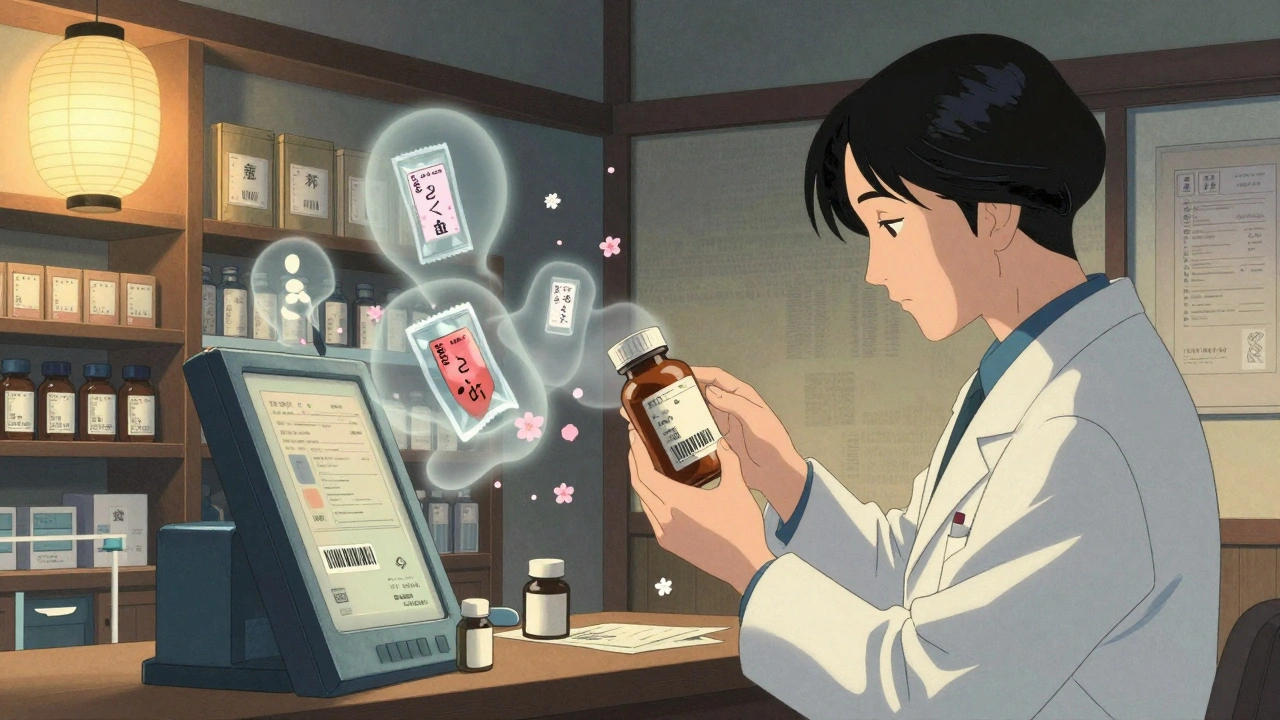
Every year, over 5.8 billion prescription drug packages move through the U.S. supply chain-from factories to warehouses, to pharmacies, and finally to patients. Behind this massive flow is a hidden battle: keeping fake, contaminated, or stolen drugs out of people’s medicine cabinets. Counterfeit drugs aren’t just a global problem-they’re a daily threat. And the system protecting legitimate drugs isn’t magic. It’s code, barcodes, regulations, and years of hard-won infrastructure built one package at a time.
How the System Stops Fake Drugs Before They Reach You
The backbone of drug security in the U.S. is the Drug Supply Chain Security Act (DSCSA), passed in 2013. It didn’t appear overnight. It was built in stages over a decade, giving companies time to adapt. At its core, DSCSA forces every player in the chain-manufacturers, distributors, pharmacies-to track every single prescription drug package using a unique digital fingerprint. That fingerprint? A 2D Data Matrix barcode printed on every bottle, blister pack, or box. Inside that tiny square are four key pieces of data: the National Drug Code (NDC), a unique serial number, the lot number, and the expiration date. This isn’t just a label. It’s a digital passport. Every time a package changes hands, that barcode is scanned and the data is shared electronically. If a package shows up that doesn’t match the manufacturer’s record, the system flags it immediately. By November 2023, every trading partner had to switch to full electronic exchange of this data using a global standard called EPCIS. That means no more paper forms, faxes, or spreadsheets. Everything is digital, automated, and verifiable in seconds.What Happens When Something Looks Suspicious
It’s not enough to track drugs-you have to act when something goes wrong. The system requires any company that spots a suspicious package to investigate within 24 hours. That could mean a package with a mismatched serial number, one that’s been reported stolen, or one that arrived from an unverified supplier. Here’s how it works in practice: A pharmacy scans a bottle and the system says, “This serial number doesn’t exist in the manufacturer’s database.” That triggers an alert. The pharmacy isolates the package, contacts the wholesaler, and the wholesaler checks with the manufacturer. If it’s confirmed as fake, the entire batch is pulled from circulation. In 2022 alone, this process stopped around 12,000 suspect products from reaching patients. The FDA says counterfeit drug seizures dropped by 63% between 2014 and 2022. That’s not luck. That’s the system working.Who’s in the Chain-and How They’re Verified
Not just anyone can handle prescription drugs. The DSCSA requires every company in the chain to be an Authorized Trading Partner (ATP). That means they’ve been officially verified by the FDA through a digital service that checks their credentials before any transaction can happen. Think of it like a background check that happens every time a shipment is sent. In 2023, the system processed over 50,000 ATP verifications per day with a 99.8% success rate. If a company isn’t on the list, the system blocks the transaction. No exceptions. This cuts out rogue suppliers and shady distributors who used to slip fake drugs into the system by pretending to be legitimate. It’s one of the most effective tools against counterfeiting.
How It Compares to Other Countries
The U.S. system isn’t the only one. The European Union runs the Falsified Medicines Directive (FMD), which also uses serialization-but with key differences. In the EU, every prescription drug must have an anti-tamper seal and a 20-digit numeric code. When a pharmacist dispenses the drug, they must scan it and “decommission” the code in a centralized EU database. Once decommissioned, the code can’t be reused. The U.S. doesn’t require decommissioning. Instead, it relies on real-time verification against manufacturer databases. The EU’s system is more rigid. The U.S. system is more flexible but requires stronger data sharing across hundreds of different software platforms. China forced serialization on all manufacturers overnight in 2019. The result? 37% of companies faced major supply chain breakdowns. The U.S. avoided that chaos by rolling it out slowly. But now, the challenge is global: a drug made in India and shipped to Brazil has to meet three different sets of rules. That’s why global pharmaceutical companies spend 22% more on compliance than U.S.-only firms.The Real-World Cost of Protection
Protecting drugs isn’t free. For a mid-sized manufacturer, setting up serialization and EPCIS systems can cost between $500,000 and $2 million. For a small independent pharmacy, annual compliance costs run around $18,500-3.2% of their net profit. Smaller pharmacies, especially those with fewer than 10 employees, struggled the most. In 2023, 63% of them said meeting the electronic data exchange deadline was too hard. Many still use outdated systems that don’t talk to modern tracking platforms. Integration with legacy software remains the top challenge, cited by 61% of logistics professionals. But the cost of not doing it? Far higher. In 2022, a single contaminated batch of infant formula took 14 days to trace and remove. With DSCSA-style tracking, the same issue was resolved in 72 hours. That speed saves lives.
What’s Next: AI, Blockchain, and the Future
The system isn’t static. New tools are being tested. Some companies are using artificial intelligence to spot anomalies-like a sudden spike in returns from a specific region, or a serial number pattern that looks forged. Others are trialing blockchain to create an immutable record of every transaction. By November 2025, all data must be exchanged in JSON format, not the older XML system. That’s a big upgrade for speed and accuracy. And by 2027, the entire chain must be fully interoperable-no more fragmented systems, no more manual workarounds. The goal? A predictive system. By 2030, experts believe the infrastructure will evolve into a real-time monitoring network that doesn’t just react to fake drugs-but prevents them before they’re even made. Think sensors on shipping containers tracking temperature and location, AI flagging unusual supply patterns, and automated alerts to regulators.What You Can Do
As a patient, you don’t need to understand barcodes or EPCIS. But you can stay alert. If a pill looks different than usual-different color, shape, or packaging-don’t take it. Ask your pharmacist to verify it. Most pharmacies now have the tools to check a drug’s authenticity in seconds. If you buy medication online, only use pharmacies that are licensed and verified. The National Association of Boards of Pharmacy (NABP) offers a list of accredited online pharmacies. Never buy from websites that don’t require a prescription or offer “too-good-to-be-true” prices. The system protecting your medicine is complex, expensive, and constantly evolving. But it’s working. Millions of doses are checked every day. Thousands of fake drugs are intercepted. And every time you get the right medicine, safe and effective, that’s the result of this invisible network doing its job.How do I know if my medication is real?
Most pharmacies can verify your medication using the DSCSA system. If your pill looks different-wrong color, size, or packaging-ask your pharmacist to scan the barcode. They’ll check it against the manufacturer’s database. If it’s flagged, they’ll replace it immediately. Never take a pill if you’re unsure.
Can I trust online pharmacies?
Only use pharmacies that are licensed and verified. Look for the VIPPS seal from the National Association of Boards of Pharmacy (NABP). Avoid websites that sell pills without a prescription, offer unusually low prices, or don’t have a physical address or phone number. Most counterfeit drugs come from unregulated online sellers.
Why do some drugs cost more now?
Part of the price increase comes from DSCSA compliance. Manufacturers and pharmacies spend millions on barcode scanners, software, training, and system upgrades. These costs are passed on. But they’re also preventing dangerous counterfeits from reaching you. The trade-off is safety versus cost-and most experts agree safety wins.
What’s the difference between serialization and traceability?
Serialization means giving each drug package a unique digital ID, like a serial number on a phone. Traceability means tracking that package as it moves from factory to pharmacy. Together, they create a complete digital trail. You can’t have traceability without serialization.
Are generic drugs less secure than brand-name ones?
No. All prescription drugs-brand or generic-are subject to the same DSCSA rules. The FDA requires the same serialization, verification, and ATP checks for every single one. A generic pill has the same digital passport as the brand version. The only difference is the manufacturer.
How often are fake drugs caught?
About 12,000 suspect products are flagged and stopped each year before reaching patients. That’s not the total number of fake drugs out there-it’s just what’s caught by the system. Experts believe the real number of intercepted counterfeits is much higher, since many never even enter the official supply chain.
What happens if a pharmacy doesn’t comply?
Non-compliant pharmacies can be fined, lose their license, or be barred from receiving prescription drugs. The FDA conducts audits and publishes compliance rates. As of 2023, 76% of pharmacies were fully compliant. Those that aren’t are under increased scrutiny.
Is the system foolproof?
No system is perfect. There are still gaps-especially with repackaged drugs or international shipments. Cyberattacks, like the 2023 Change Healthcare breach, can temporarily disrupt verification. But the system has dramatically reduced counterfeit drugs. It’s not about perfection-it’s about making it so hard to fake drugs that it’s not worth the risk.

Darren Ramowski
My name is Calem Goodridge, and I am a pharmaceutical expert with a passion for educating others about medication and diseases. I have dedicated my career to researching and developing life-changing medical treatments. In my spare time, I enjoy writing articles and sharing my knowledge with the general public to help them make informed healthcare decisions. I am also an advocate for safe medication practices and believe that patient education is key to preventing adverse drug events. With my extensive experience in the pharmaceutical industry, I strive to make a positive impact on the lives of others through my writing.
Yeah right, like the system actually works. I know a guy whose insulin got swapped out in a warehouse and the barcode scanned just fine. Turns out the fake batch had legit-looking serials cloned from real ones. DSCSA? More like DSC-Don't-Sleep-At-Night.
OMG this is so scary 😱 I just checked my blood pressure meds and the bottle looked kinda off?? Like the font was slightly different?? I’m gonna scream if I got fake pills 😭
This is actually one of the most impressive pieces of infrastructure in the U.S. You don’t hear about it because it works silently. Millions of doses checked every day. No fanfare, no headlines-just people getting the right medicine. Hats off to the engineers and pharmacists making this happen.
They’re using this to track us too. You think the barcode is just for drugs? Nah. It’s a microchip. They’re logging every pill you take. Next thing you know, your insurance rates go up because you took too many ibuprofen. And don’t get me started on the FDA’s secret AI that predicts when you’ll get sick.
It is utterly disgraceful that small pharmacies are burdened with compliance costs while multinational corporations evade accountability. The DSCSA is a noble framework, yet its implementation reveals a profound moral failure: we prioritize corporate efficiency over the survival of local healthcare providers. This is not regulation-it is systemic erosion of community medicine.
You think this is about safety? It’s about control. The FDA doesn’t care if you live or die-they care if the system looks clean on paper. Real people die from delays in verification. Real people get stuck with expired meds because a server went down. This isn’t protection. It’s bureaucracy dressed up as a shield.
While the technological infrastructure described herein exhibits a commendable degree of operational sophistication, it remains fundamentally susceptible to adversarial exploitation via adversarial machine learning and supply chain spoofing vectors. The reliance upon serial number verification, absent cryptographic attestation, constitutes a critical vulnerability. Furthermore, the absence of quantum-resistant encryption protocols renders this entire architecture obsolete within a decade
So let me get this straight-some guy in India makes a fake pill, it gets shipped to a warehouse in Ohio, and somehow the barcode still scans? But the system’s supposed to stop this? Bullshit. I’ve seen the logs. They’re full of false negatives. They’re just counting how many times the system ‘worked’ while ignoring the ones it missed. This whole thing’s a PR stunt.
For all the flaws, this system saved my mom’s life last year. She got a new prescription, the pharmacist flagged it, turned out the batch was stolen. They pulled 200 bottles before anyone else got them. No fanfare. No press. Just a quiet scan and a phone call. That’s the real win here-not the tech, but the people who show up every day to make it work.