Many of us reach for a "natural" remedy when we want to feel better without the harshness of a prescription pill. It seems like a safe bet, right? However, the idea that "natural" automatically means "safe" is a dangerous misconception. When you mix certain herbs with prescription meds, they don't always play nice. In some cases, the herb can make your medication dangerously strong; in others, it can wipe out the drug's effectiveness entirely, leaving you unprotected against the very condition you're trying to treat.
The reality is that herbal supplement-drug interactions are a serious health concern. According to the National Center for Complementary and Integrative Health (NCCIH), about 23% of U.S. adults use herbal supplements, and nearly 40% of those people are also taking prescription drugs. This overlap creates a massive window for potential complications that often go unnoticed until something goes wrong.
The Hidden Science: How Herbs Change Your Meds
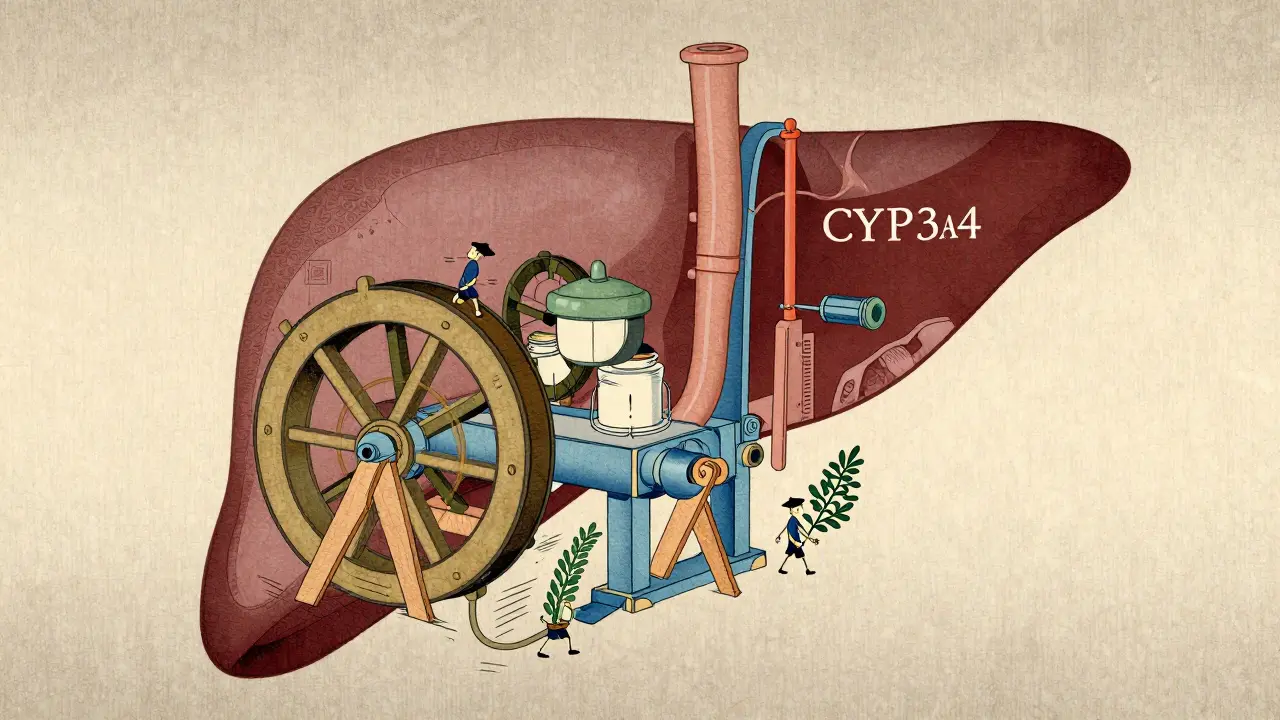
To understand why this happens, we have to look at how your body processes medicine. Most drugs are broken down by enzymes in your liver. One of the most important is CYP3A4, a enzyme that handles about 50% of all prescription drugs. Think of it as a biological shredder that clears medicine out of your system.
Herbs can mess with this "shredder" in two ways:
- Inducers: Some herbs speed up the shredder. If the enzyme works too fast, your medication is cleared from your blood before it can do its job. You might feel like your medicine "stopped working."
- Inhibitors: Other herbs jam the shredder. This causes the medication to build up in your bloodstream to toxic levels, which can lead to an accidental overdose even if you took the correct dose.
There's also the P-glycoprotein (P-gp), a transporter protein that acts like a security guard, pumping drugs back out of cells to keep levels balanced. When an herb disables this guard, drug absorption increases, which can lead to unpredictable and dangerous side effects.
The High-Risk List: Herbs to Watch Out For
Not every herb is a problem, but a few are notorious for causing chaos in the body. The most infamous is St. John's wort, a plant used for depression that is essentially the "king" of drug interactions. It is a potent inducer of CYP3A4, meaning it can slash the concentration of other drugs in your blood by 20% to 70%.
For someone taking cyclosporine after an organ transplant, St. John's wort can drop drug levels by 57%, potentially leading to organ rejection. It also makes birth control pills less effective, which has led to documented cases of unplanned pregnancies. If you're on HIV protease inhibitors or digoxin for heart failure, this herb can render those life-saving meds nearly useless.
Other common culprits include:
- Ginkgo biloba: Often taken for memory, it can increase bleeding risk by 30% if you're using blood thinners like warfarin.
- Garlic: While great in a recipe, high-dose garlic supplements can lower the concentration of certain antiviral drugs, like saquinavir, by over 50%.
- Goldenseal: This herb inhibits the enzymes that break down dextromethorphan and metoprolol, potentially spiking blood levels of these drugs by 30-50%.
- Hawthorn: Commonly used for heart health, it can drop blood pressure by an extra 10-15 mmHg when paired with beta-blockers, sometimes leading to fainting or emergency room visits.
| Herb | Primary Mechanism | Typical Effect | Risk Level |
|---|---|---|---|
| St. John's wort | CYP3A4 Inducer | Decreases drug effectiveness | Very High |
| Ginkgo biloba | CYP2C19 Inhibitor | Increases bleeding risk | Moderate |
| Goldenseal | CYP3A4/2D6 Inhibitor | Increases drug toxicity | Moderate |
| Hawthorn | Pharmacodynamic | Additive blood pressure drop | Moderate |
| Valerian | CNS Depressant | Potentiates sedation | Low/Moderate |
The "Natural" Trap and Regulatory Gaps
Why aren't we warned more about this? A big part of the problem is how supplements are regulated. In the U.S., the 1994 Dietary Supplement Health and Education Act (DSHEA) allows companies to sell supplements without the rigorous pre-market safety testing that prescription drugs must undergo. This means that many interaction risks aren't discovered until people start getting sick and reporting it to the FDA.
There is also a psychological gap. A 2023 survey by the Council for Responsible Nutrition found that 77% of users believe natural products are inherently safer than prescription drugs. This leads to a dangerous lack of communication. When you're at the doctor, you might mention your blood pressure medication but "forget" to mention the herbal tea or the ginseng capsule you take every morning because it doesn't feel like a "real" drug.
This silence is deadly. In one study of Israeli inpatients, 25% were taking supplements, but the medical team was unaware in 72% of those cases. When your doctor doesn't know what's in your system, they can't adjust your dosage or warn you about side effects.
How to Stay Safe: A Practical Guide
You don't have to stop taking your supplements entirely, but you do need to be smart about it. The goal is to ensure that your natural wellness routine doesn't sabotage your medical treatment.
First, keep a complete list. Don't just write down "vitamins." Be specific. List the exact name of the herb, the brand, and the dosage. If you're taking something like Danshen or American ginseng, make sure those are on the list, as they are frequently overlooked by providers.
Second, ask your pharmacist. Pharmacists are the real experts in pharmacokinetics. Instead of asking "is this safe?", ask "does this herb affect the CYP450 enzymes or P-gp transporters for my specific medication?" This prompts them to look for the technical mechanisms of interaction rather than giving a generic "it should be fine" answer.
Third, watch for new symptoms. If you start a new herbal supplement and suddenly feel more tired, dizzy, or notice your medication isn't working as well, stop the supplement immediately and call your doctor. For example, if you're on warfarin and start taking ginkgo, keep a very close eye on any unusual bruising or nosebleeds.
The Future of Supplement Safety
The medical community is starting to catch up. We're seeing the rise of AI tools, such as the Herb-Drug Interaction Prediction Engine from the University of California, which can predict risks with 87% accuracy by analyzing thousands of known interactions. Additionally, the European Medicines Agency is now requiring more comprehensive interaction studies for herbal medicinal products.
While these tools are great, they don't replace honest communication between you and your healthcare provider. The most effective safety tool is still a thorough medication reconciliation-the process where you and your doctor sit down and account for every single substance entering your body, whether it comes from a pharmacy or a health food store.
Does "natural" mean it won't interact with my medicine?
No. Many natural compounds are pharmacologically active, meaning they change how your body functions. They can interfere with liver enzymes (like CYP3A4) that break down your medications, either making the drugs too strong or completely ineffective.
Which herbal supplement is the most dangerous to mix with meds?
St. John's wort is widely considered the highest-risk supplement. It can lower the blood levels of a vast range of drugs, including oral contraceptives, antidepressants, blood thinners, and transplant medications, significantly increasing the risk of treatment failure.
Can herbal supplements cause an overdose of my prescription drugs?
Yes. Some herbs, like Goldenseal, inhibit the enzymes that clear drugs from your system. If the medicine isn't being broken down, it builds up in your bloodstream, which can lead to toxicity or an overdose, even if you are taking the prescribed dose.
Why doesn't my supplement bottle warn me about drug interactions?
Because of regulations like the DSHEA in the U.S., supplement manufacturers aren't required to perform the same rigorous interaction testing as pharmaceutical companies. Many products hit the market without comprehensive safety data on how they interact with other drugs.
How should I tell my doctor about the supplements I take?
Bring the actual bottles to your appointment or provide a detailed list that includes the brand, the specific herb, and the dosage. Be sure to include "natural" items like specialty teas or botanical extracts, as these are often forgotten during standard medical history questions.

Darren Ramowski
My name is Calem Goodridge, and I am a pharmaceutical expert with a passion for educating others about medication and diseases. I have dedicated my career to researching and developing life-changing medical treatments. In my spare time, I enjoy writing articles and sharing my knowledge with the general public to help them make informed healthcare decisions. I am also an advocate for safe medication practices and believe that patient education is key to preventing adverse drug events. With my extensive experience in the pharmaceutical industry, I strive to make a positive impact on the lives of others through my writing.