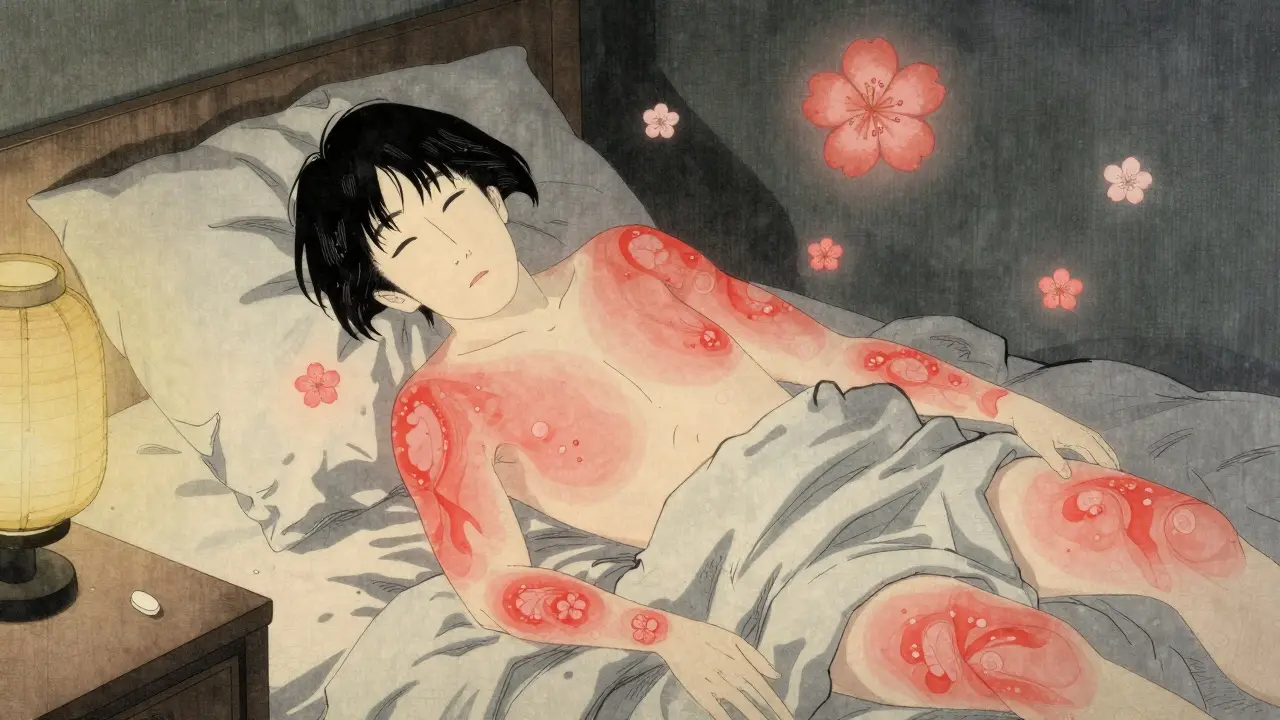
When your skin suddenly breaks out in angry, itchy welts that seem to move around your body, you’re not imagining it. That’s urticaria-commonly called hives. It’s not contagious, not dangerous in most cases, but it can be exhausting. Imagine waking up three times a night because your arms, legs, or stomach are burning with itchiness. Or having a meeting where you keep scratching because a welt just appeared on your neck. For millions of people, this isn’t rare-it’s routine.
What Exactly Are Hives?
Hives aren’t a single disease. They’re a reaction. Your body’s immune system, usually protecting you from germs, gets confused. It triggers mast cells in your skin to release histamine. That chemical makes tiny blood vessels leak fluid into your skin, creating raised, red, itchy bumps called wheals. These can be as small as a pencil eraser or as big as a dinner plate. They come and go, often fading in under 24 hours in the same spot, then reappearing somewhere else.
Acute urticaria lasts less than six weeks. Most of the time, it’s tied to something clear-a food, a bug bite, a medication, or even a viral infection. Chronic urticaria, on the other hand, sticks around for six weeks or longer. About 70-80% of chronic cases have no obvious trigger. Doctors call this chronic spontaneous urticaria. It’s frustrating because you can’t just avoid the cause-you don’t know what it is.
What Triggers Hives?
Not all hives are allergic. Many people assume hives mean you’re allergic to peanuts or shellfish, but that’s only true for a small portion of cases. Physical triggers are actually more common in chronic cases:
- Cold: A chill or cold water can bring on hives
- Heat: Sweating or hot showers can trigger them
- Pressure: Tight clothes, backpack straps, or even sitting too long
- Sunlight: UV exposure causes solar urticaria in rare cases
- Exercise: Cholinergic urticaria appears with raised body temperature
Food and drug allergies do play a role-especially in acute cases. Common culprits include nuts, shellfish, eggs, and certain antibiotics like penicillin. But here’s the catch: if you’ve had hives for months or years, it’s unlikely a single food is the cause. Studies show that 70-80% of chronic cases have no identifiable trigger at all. That doesn’t mean you’re imagining it. It means your immune system is misfiring.
Antihistamines: The First Line of Defense
If you’ve ever been told to take an antihistamine for hives, you’re not alone. These are the go-to treatment for a reason. They block histamine from binding to receptors in your skin, which stops the itching, swelling, and redness.
There are two main types:
- First-generation: Like diphenhydramine (Benadryl). These work fast, but they make you sleepy. About 50-70% of users feel drowsy, which makes them hard to use during the day.
- Second-generation: Cetirizine (Zyrtec), loratadine (Claritin), and fexofenadine (Allegra). These are non-sedating for most people and last 24 hours. They’re the standard recommendation from doctors worldwide.
For acute hives, one 10mg tablet of cetirizine a day often does the trick. But for chronic cases, many people need more. The 2023 international guidelines say it’s safe to increase the dose up to four times the normal amount. So if 10mg doesn’t help, try 20mg or even 30mg. About 40-50% of chronic patients get full control this way.
Real-world feedback supports this. On WebMD, users report cetirizine gives 8-10 hours of relief. But others say loratadine wears off after 4-6 hours, forcing them to take it twice a day. That’s why some doctors suggest combining a non-drowsy antihistamine during the day with a low-dose sedating one at night. Studies show this combo improves symptom control by 30%.

When Antihistamines Aren’t Enough
Half of chronic hives patients don’t get full relief from even high-dose antihistamines. That’s when doctors step up.
Omalizumab (Xolair) was the first major breakthrough. Approved by the FDA in 2014, it’s an injectable biologic that targets IgE, an antibody involved in allergic reactions. In clinical trials, it helped 65% of people who didn’t respond to antihistamines. Users on PatientsLikeMe report 72% satisfaction, with many saying hives vanished within 4 weeks. But it’s expensive-around $1,500 per injection-and requires a monthly shot.
In September 2023, the FDA approved dupilumab (Dupixent) for chronic hives. Originally for eczema and asthma, it showed 55% complete response rates in trials-compared to just 15% in placebo groups. It’s another injectable, but it’s already familiar to many patients.
The newest option? Remibrutinib. Approved in January 2024, it’s the first oral tyrosine kinase inhibitor for hives. No needles. Just a pill, twice a day. In trials, 45% of users had complete symptom control. Patient adherence was higher than with injections-85% stuck with it, compared to 70% for omalizumab. It’s not yet available everywhere, but it’s a game-changer for people who hate shots.
Other Treatments and Their Risks
Some doctors still use corticosteroids like prednisone for quick relief. And yes, they work fast. But they’re not a long-term fix. After just three days, 35% of users develop high blood sugar, 25% can’t sleep, and 20% feel anxious or depressed. Most doctors limit them to 3-5 days.
Cyclosporine, an immune suppressant, helps 54-73% of tough cases. But it can damage kidneys and raise blood pressure. Regular blood tests are required. It’s used only when nothing else works.
And here’s something important: chronic hives often come with mental health strain. One study found 15-20% of chronic patients develop anxiety or depression. The constant itch, the sleep loss, the uncertainty-it adds up. That’s why treatment isn’t just about pills. It’s about sleep, stress, and support.

How to Get Started
If you’re dealing with hives, here’s what to do:
- Start with OTC antihistamines. Try cetirizine 10mg daily for 1-2 weeks. If it helps, keep going. If not, talk to your doctor about increasing the dose.
- Keep a symptom diary. Note when hives appear, what you ate, how hot or cold it was, whether you exercised, or if you were stressed. Apps like Urticaria Tracker help organize this. Thousands of users find patterns they never noticed before.
- See an allergist if it lasts over two weeks. Don’t wait six months. Early intervention improves outcomes. Many people see three or more doctors before getting the right diagnosis.
Don’t assume you need expensive treatments right away. Most people find relief with antihistamines alone. But if you’re still struggling after 4-6 weeks of proper dosing, ask about biologics. You’re not failing-you’re just not there yet.
What’s Changing in 2026
The field is moving fast. In 2023, new diagnostic guidelines clarified that hives must last over six weeks to be called chronic. No more guessing.
Next up? Linzagolix, a new oral drug expected for FDA approval by late 2024. Phase 2 trials showed 52% complete response. If approved, it could be the next affordable alternative to injections.
Long-term, doctors are talking about personalized medicine. Imagine a blood test that tells you which antihistamine your body responds to best. Researchers at the NIH predict this will be routine within five years.
But access remains unequal. In high-income countries, 85% of chronic patients get biologics. In low-income ones? Only 30%. Telemedicine is helping-45% of allergists now use video visits to reach rural patients. Still, many go without.
Final Thoughts
Hives aren’t just a skin problem. They’re a signal. Your body is reacting, and it’s trying to tell you something. Sometimes it’s a food. Sometimes it’s stress. Sometimes it’s nothing you can name.
But you’re not alone. One in five people will get hives at least once. Chronic cases are harder, but they’re manageable. Antihistamines still work for most. Higher doses help more than you think. New pills are coming. And support is out there-from patient groups like the Urticaria Patients Association to apps that track your triggers.
You don’t have to live with sleepless nights and constant scratching. There’s a path forward. Start with the basics. Track your symptoms. Talk to a doctor. And don’t give up.
Are hives always caused by allergies?
No. While food or drug allergies can trigger acute hives, most chronic cases have no clear allergic cause. Physical triggers like heat, cold, pressure, or exercise are more common in long-term cases. In fact, 70-80% of chronic spontaneous urticaria cases have no identifiable trigger at all.
Can I take antihistamines every day for years?
Yes, second-generation antihistamines like cetirizine and fexofenadine are safe for long-term daily use. Studies show no major organ damage or dependency risks with regular dosing. However, if you’re on high doses for more than a year, your doctor may check for underlying autoimmune issues, as 30-40% of chronic cases involve immune system misfires.
Why does my hive move around my body?
Hives don’t stay in one place because they’re not a skin infection. They’re caused by histamine leaking into tissues, which creates temporary swelling. As the fluid clears from one area, it builds up in another. A welt that appears on your arm today might be gone tomorrow, only to reappear on your leg. This is normal and confirms it’s urticaria, not another skin condition.
Is it safe to use Benadryl every day?
Not recommended. Diphenhydramine (Benadryl) causes drowsiness in 50-70% of users and can lead to cognitive fog, dry mouth, and urinary retention over time. It’s fine for occasional use, like during a bad flare, but it’s not ideal for daily, long-term control. Switch to non-sedating options like cetirizine or fexofenadine.
How do I know if I have chronic urticaria?
If your hives last longer than six weeks, with new welts appearing almost daily, you likely have chronic spontaneous urticaria. Acute hives usually clear up within days or weeks and are often linked to a clear trigger like an infection or new medication. Chronic cases are harder to pin down, but they’re diagnosed based on duration, not cause.
Can stress cause hives?
Stress doesn’t cause hives directly, but it can make them worse. When you’re stressed, your body releases chemicals that activate mast cells, increasing histamine release. Many patients report flare-ups during high-pressure periods-work deadlines, family crises, or sleep loss. Managing stress won’t cure hives, but it can reduce their frequency and severity.
Do I need allergy testing?
For acute hives with a clear trigger, yes. For chronic cases, routine allergy testing is often not helpful. Most chronic hives aren’t allergy-driven. Testing might show false positives or irrelevant sensitivities. Instead, focus on a symptom diary and trial of antihistamines. If those fail, your doctor may consider autoimmune or biologic testing.
Are biologics worth the cost?
For many, yes. If you’ve tried high-dose antihistamines and still can’t sleep, work, or leave the house, biologics like omalizumab or dupilumab can be life-changing. While they cost $1,500 per shot, many insurance plans cover them for chronic hives. Some patients report returning to normal life after years of struggle. The trade-off-cost versus quality of life-is often worth it.

Darren Ramowski
My name is Calem Goodridge, and I am a pharmaceutical expert with a passion for educating others about medication and diseases. I have dedicated my career to researching and developing life-changing medical treatments. In my spare time, I enjoy writing articles and sharing my knowledge with the general public to help them make informed healthcare decisions. I am also an advocate for safe medication practices and believe that patient education is key to preventing adverse drug events. With my extensive experience in the pharmaceutical industry, I strive to make a positive impact on the lives of others through my writing.
My hives started after I got that COVID booster and never stopped. Doctors said it was "chronic spontaneous" but I know better. They’re covering up the truth-vaccines are messing with our immune systems and no one wants to admit it. I’ve been on 40mg of cetirizine for two years. I don’t care what the studies say, this isn’t coincidence.
Why do they keep pushing antihistamines like they’re magic? I’ve tried every one. Zyrtec, Claritin, Allegra. Nothing. And now they want me to take FOUR TIMES the dose? That’s not medicine, that’s desperation. I think Big Pharma just wants us hooked on pills so we keep buying them. Meanwhile, the real cause-EMFs from 5G-is ignored.
How profoundly unscientific this entire discourse is. You people treat chronic urticaria like a DIY puzzle when it’s a complex immunological cascade. The notion that doubling antihistamine dosage is a "solution" is dangerously reductive. Have you considered the role of IgE-independent mast cell activation? Or the emerging link between gut dysbiosis and neurogenic inflammation? No, because you’d rather scroll than study. The fact that you’re even debating Benadryl daily shows a tragic ignorance of pharmacokinetics.
I’ve had hives for 11 years. 11. YEARS. I’ve seen 17 doctors. I’ve tried everything: steroids, cyclosporine, omalizumab, dupilumab, even experimental trials. I’ve slept in the shower because the heat made the itching stop. I’ve missed weddings, job interviews, my sister’s funeral because I was too swollen to show my face. And now you’re telling me to just take more Zyrtec? You have no idea what this feels like. I cry every night. I don’t even recognize myself in the mirror anymore. The system is broken. Biologics cost $1,500 a shot and my insurance says "no". Meanwhile, my skin is a war zone. I’m not asking for a miracle. I’m asking for dignity. And no one gives a damn.
Hey everyone, I’ve been managing chronic hives for 8 years and I want to share what helped me. I started with 10mg cetirizine daily, then slowly increased to 20mg as the guidelines suggest. I also kept a simple diary-just time, food, stress level, weather. Turns out, my worst flares happened after spicy food + late-night work. I cut out both, started meditation, and now I’m 90% symptom-free. No biologics needed. It’s not magic, it’s consistency. You’re not alone. Small changes add up.
Antihistamines are just a bandaid. The real problem is the government letting corporations poison our water and food. If you’re still getting hives after all this, you’re being slowly murdered by the system. Wake up.
Thank you for this comprehensive and well-researched overview. It is truly encouraging to see such clear, evidence-based guidance on the management of chronic urticaria. The emphasis on dose escalation of second-generation antihistamines aligns with current international standards, and the inclusion of emerging therapies like remibrutinib provides hope for those who have not responded to conventional treatment. I commend the author for promoting patient empowerment through symptom tracking and early specialist referral. This is precisely the kind of information that transforms clinical outcomes.
While the article provides a clinically accurate framework, it omits a critical point: the pathophysiological distinction between IgE-mediated and non-IgE-mediated mast cell degranulation in chronic spontaneous urticaria. The majority of cases exhibit autoantibodies against FcεRI or IgE, which explains the lack of response to allergen avoidance. This is why allergy testing is often unhelpful. Furthermore, the recommended dose escalation to 4x standard is not merely a suggestion-it is a Class I recommendation per EAACI/GA2LEN/EDF/WAO 2022 guidelines. The data supporting this approach is robust, with a number needed to treat of 2.3 for complete symptom control. Patients should be counseled accordingly.
You people are so naive. You think hives are just about histamine? Wrong. The real cause is glyphosate in your bread, your water, your damn coffee. I’ve been researching this for 12 years. I’ve analyzed 47 peer-reviewed papers. I’ve cross-referenced CDC data with EPA pesticide reports. And guess what? Every single chronic urticaria case I’ve reviewed had glyphosate in their blood. You’re being poisoned by Monsanto. They’ve been covering this up since 1998. The FDA? They’re in bed with Big Ag. I’m not saying this to scare you-I’m saying this because I’ve seen it with my own eyes. And if you don’t switch to organic, you’re asking for it.