
When your back aches, your knees throb, or labor contractions hit hard, reaching for a pill isn’t always the best or safest option. That’s where TENS therapy comes in - a simple, non-drug way to ease pain using tiny electrical pulses. You’ve probably seen these small, battery-powered devices in physio clinics or on Amazon, but do you actually know how they work - and if they’ll help you?
What Is TENS Therapy, Really?
TENS stands for Transcutaneous Electrical Nerve Stimulation. It’s not magic. It’s not surgery. It’s science - based on a theory from 1965 called the Gate Control Theory of Pain. The idea? Your body has a limited amount of space to process signals. When you zap your skin with mild electrical pulses, those signals flood the nerves and crowd out the pain messages trying to get through to your brain.
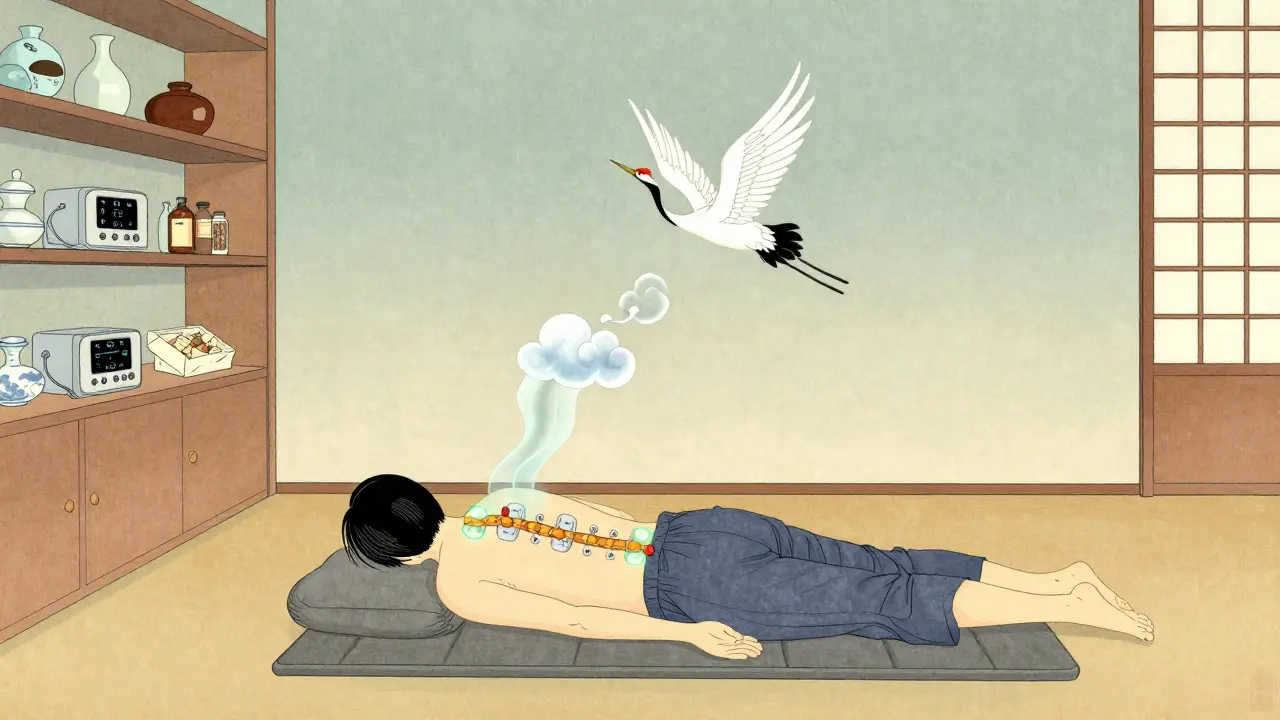
Think of it like turning up the volume on a song to drown out a loud noise. The electrical tingling from the TENS unit doesn’t remove the source of your pain, but it changes how your brain hears it. The device sends low-voltage current through sticky pads (electrodes) placed on your skin, right over or near the painful area. No needles. No drugs. Just a buzzing, tingling sensation you can control.
How Does It Actually Work? Two Main Ways
Not all TENS settings are the same. There are two primary modes, and choosing the right one matters a lot.
High-frequency TENS (50-100 Hz) is the most common. You’ll feel a strong, comfortable tingling - not painful, just noticeable. This mode works fast. It’s great for sudden pain like after surgery, a sprained ankle, or during labor. It blocks pain signals before they reach your spinal cord. Most home units default to this setting.
Low-frequency TENS (2-5 Hz) feels different. It’s slower, with deeper pulses that might even cause mild muscle twitching. This one triggers your body to release its own painkillers - endorphins. It’s slower to kick in, but the relief can last longer after you turn it off. People with chronic lower back pain or arthritis often prefer this mode.
Some newer units have a burst mode, which mixes both. It sends quick bursts of high-frequency pulses every few seconds. This gives you the immediate blocking effect plus the endorphin boost. It’s becoming popular for stubborn pain that doesn’t respond to one method alone.
What Pain Conditions Does TENS Help With?
TENS isn’t a cure-all. But for specific types of pain, it’s been shown to make a real difference.
- Post-surgical pain: Studies show people using TENS after surgery need 27% fewer opioids and report less nausea and drowsiness.
- Osteoarthritis: In one review, TENS reduced knee or hip arthritis pain by 35.7% - nearly three times better than a placebo.
- Lower back pain: It helps, but not as much as physical therapy. One study found TENS gave 42% improvement; manual therapy gave 59%.
- Labor pain: A Cochrane Review found TENS users reported 31% more pain relief during contractions than those using no device.
- Neuropathic pain: Nerve pain from diabetes or shingles? Some people get relief, but results are mixed. It’s worth trying if other options haven’t worked.
It doesn’t work as well for widespread pain like fibromyalgia. Only about 38% of people with fibromyalgia saw meaningful improvement.
Why People Love It - And Why Some Hate It
On review sites, users give TENS units an average of 3.7 out of 5. Here’s what they say:
- Pros: Instant relief while it’s on (78% of happy users), no meds or side effects (82%), portable enough to wear all day (63%), easy to use at home.
- Cons: Skin irritation from pads (34%), inconsistent results (29%), battery dies too fast at high settings (27%), and most frustrating - it just doesn’t work for some people.
One Reddit user put it bluntly: “TENS works great for my sciatica - but only if I crank it to 85%. Anything less just tickles. Problem? Battery dies in 90 minutes.”
That’s the key: intensity matters. Research shows 68% of failed TENS treatments happened because people didn’t turn the dial high enough. You need to feel it - but not in pain. If it’s barely noticeable, it’s probably not working.

Where to Put the Pads - And Why It’s Crucial
Placement is everything. If you stick the pads randomly, you’re wasting your time.
For lower back pain, place one pad on each side of your spine, just above the belt line. For knee pain, put one above and one below the kneecap. For shoulder pain, place one on the top of the shoulder and one on the back of the upper arm. The pads should be within 2-3 cm of the pain source, or over the nerve pathway that’s sending the signal.
A 2021 study of 342 patients found that 41% of treatment failures were due to incorrect electrode placement. That’s more than 2 in 5 people giving up because they didn’t know where to put the pads.
Pro tip: Use conductive gel under the pads if your skin is dry or hairy. It cuts signal loss by 63%, according to electrotherapy experts.
What to Expect - And How Long It Lasts
Most people feel relief within 10-20 minutes. Sessions typically last 20-40 minutes. You can use it several times a day. The relief usually fades after you turn it off, unless you’re using low-frequency mode, which can trigger endorphins that last for hours.
One case study from Cleveland Clinic followed a 54-year-old woman with chronic back pain. After just 20 minutes of proper TENS use, her pain dropped from 7.8/10 to 3.2/10. She cut her oxycodone use by 60%.
But don’t expect miracles. TENS works best as part of a bigger plan - with stretching, movement, and maybe physical therapy. It’s a tool, not a replacement.
What’s New in TENS Tech?
The market is evolving fast. In 2023, the FDA cleared the first AI-powered TENS device, NeuroLoop AI. It uses sensors to detect your body’s response and automatically adjusts the settings. In trials, it reduced pain 44% more than standard TENS.
Smart electrodes are coming too - pads with built-in sensors that check skin contact and adjust current to keep the signal steady. No more fiddling with pads that fall off during movement.
Big companies like Omron and Chattanooga dominate the market, but cheaper brands like TechCare are making TENS more accessible. Prices range from $30 for basic units to $300+ for smart, multi-channel devices.
Insurance helps too. In the U.S., Medicare covers TENS units under code E0720, reimbursing around $150. Many private insurers follow suit - if your doctor prescribes it.
Who Should Avoid TENS?
TENS is safe for most people. But don’t use it if:
- You have a pacemaker or other implanted electronic device
- You’re pregnant (except for labor, under supervision)
- You have cancer in the area you want to treat
- You have open wounds, infections, or broken skin where the pads go
- You have epilepsy - avoid placing pads near your head or neck
If you’re on opioid medication, low-frequency TENS might not work as well. Studies show opioids can block the body’s natural endorphin response, making that mode less effective.
Is It Worth Trying?
If you’re tired of side effects from painkillers, or if your doctor says you’re a candidate for non-drug pain relief - yes, it’s worth a shot.
The CDC now recommends TENS as a first-line option for chronic pain. The American Physical Therapy Association gives it a weak recommendation, but says it’s better than nothing. And with opioid prescribing down and patient demand for drug-free options up, TENS is becoming a standard part of pain clinics.
Start with a basic unit. Learn how to place the pads. Dial the intensity up until you feel a strong, buzzing sensation - but no pain. Try it for 20 minutes, twice a day, for a week. Keep a simple journal: What did you feel? Did it help? How long did it last?
It’s not a magic bullet. But for millions of people, it’s the difference between enduring pain and getting through the day.
Can I use TENS every day?
Yes, most people use TENS daily, especially for chronic pain. Limit sessions to 20-40 minutes at a time, and take breaks between uses. If your skin gets red or irritated, give it a day off. Always follow your device’s manual.
Does TENS help with nerve pain?
It can, but results vary. Nerve pain (like from diabetes or sciatica) responds better to high-frequency settings (50-100 Hz). Some people get strong relief; others notice little change. It’s worth trying if other treatments haven’t worked - especially since it has no side effects.
How long do TENS batteries last?
Most units last 8-10 hours on a full charge at moderate intensity. If you crank the setting up high (like 80%+), battery life drops to 60-90 minutes. Rechargeable lithium-ion batteries are common now. Always carry spare batteries or a charger if you’re using it all day.
Can I use TENS with other pain treatments?
Absolutely. TENS works well alongside physical therapy, heat packs, massage, and even mild exercise. It’s often part of a multimodal plan. Just avoid using it with other electrical devices like EMS muscle stimulators unless your therapist says it’s safe.
Do I need a prescription to buy a TENS unit?
No, you can buy TENS units over the counter in stores or online. But if you want insurance to cover it (like Medicare or private plans), you’ll need a doctor’s prescription and documentation that it’s medically necessary. Always check with your insurer first.
Is TENS safe during pregnancy?
It’s considered safe for use during labor, and many hospitals offer it as a natural pain relief option. But avoid using it on your abdomen or lower back during early or mid-pregnancy unless approved by your OB-GYN. Stick to low-intensity settings and avoid the pelvic area unless under professional guidance.
Next Steps: How to Get Started
1. Talk to your doctor or physiotherapist. Ask if TENS is right for your type of pain.
2. Get a unit. Start with a basic, dual-channel model under $100. Look for adjustable frequency, intensity, and timer settings.
3. Learn placement. Watch a video from a reputable source (like the American Physical Therapy Association) or ask your therapist to show you.
4. Test it. Use it for 20 minutes, twice a day, for a week. Track your pain levels before and after.
5. Adjust. If it doesn’t help, try changing the frequency or pad placement. If it still doesn’t work after 2 weeks, it might not be for you - and that’s okay.
TENS won’t fix everything. But for the right person, it’s a quiet, powerful tool - one that lets you take control without a pill.

Darren Ramowski
My name is Calem Goodridge, and I am a pharmaceutical expert with a passion for educating others about medication and diseases. I have dedicated my career to researching and developing life-changing medical treatments. In my spare time, I enjoy writing articles and sharing my knowledge with the general public to help them make informed healthcare decisions. I am also an advocate for safe medication practices and believe that patient education is key to preventing adverse drug events. With my extensive experience in the pharmaceutical industry, I strive to make a positive impact on the lives of others through my writing.
Used one of these after my knee surgery. Cranked it to 85% like the Reddit guy said. Felt like a bee was doing push-ups on my skin. Pain dropped from a 9 to a 4. Battery died in 78 minutes. Worth it.
USA always think they invented everything! In Nigeria, we use herbs, chants, and ancestral wisdom. This TENS thing? Just modern magic for people who don’t trust their own bodies 😒⚡️
I’ve been using my TENS unit for lower back pain for 6 months now. Honestly? It’s been a game-changer. I used to rely on ibuprofen every day. Now I just turn it on while I drink my coffee. No side effects, no nausea. Just quiet relief. 💛
My mom uses this thing during her arthritis flare-ups. She calls it her ‘zappy belt.’ I thought it was a scam until I saw her go from wheezing to walking to the fridge without help. Wild. Also, the gel tip? Genius. I bought some. Now I use it on my shoulders after Zoom calls.
Let’s deconstruct this neoliberal pain-industrial complex. TENS is a capitalist distraction - a techno-solutionist Band-Aid for systemic healthcare collapse. The Gate Control Theory? A 1965 relic that ignores neuroplasticity and somatic trauma. You’re not ‘blocking pain,’ you’re numbing the signal of a body screaming for attention. The real issue? We’ve outsourced healing to gadgets because we’ve lost the ritual of care. Endorphins? They’re not chemical - they’re spiritual. And no, your lithium-ion battery doesn’t cure existential suffering.
Just got my first TENS unit yesterday. Tried it on my sciatica. Didn’t feel much at first. Then I turned it up till my leg twitched. Holy crap. It worked. No more lying on the floor crying. I’m gonna use it every day now. Thanks for the tips on placement. I was putting them wrong.
Wait. So you’re telling me this device is FDA approved… but the same company that makes these also makes those ‘vibe belts’ for ‘female wellness’? And now Medicare pays for it? 🤔 This is a Trojan horse. They’re normalizing electrical stimulation so they can later implant microchips under your skin for ‘pain monitoring.’ Big Pharma’s next move. They want you addicted to the device so you never ask why you’re in pain in the first place. Watch the documentary ‘Zapped’ on Tubi. It’s chilling.
I’ve spent years chasing pain relief - pills, acupuncture, chiropractors, even a weird cryotherapy thing. TENS was the last thing I tried. Didn’t expect much. But it’s the first thing that let me sleep without waking up in a cold sweat. It’s not magic. It’s just… kind. Like a quiet friend saying ‘I’m here.’ No hype. No pills. Just a gentle buzz that says, ‘You’re not alone.’
For anyone new to TENS: start low, increase slowly, and don’t use it over the heart or throat. Also, if your skin gets red, skip a day. The pads are cheap, but your skin isn’t. And yes - gel helps. I use aloe-based conductive gel. Works better than the stuff that comes with the unit.
Oh wow. A whole article about a $30 gadget. How quaint. Real pain management involves neural mapping, biofeedback, and maybe even a bit of psychotherapy. This is like using a flashlight to navigate a cave you haven’t bothered to map. If you’re not seeing a specialist who understands central sensitization, you’re just playing with electricity. And yes, I’ve seen this before. It’s not that it doesn’t work - it’s that most people use it wrong because they’re too lazy to learn.
Wait - so you’re saying this device doesn’t have a hidden government tracking chip? And the battery life? How do we know it’s not transmitting our pain data to the NSA? I’ve read about ‘electromagnetic mind control’ in the 1970s. This is just the same thing - now with Bluetooth and a 5-star Amazon rating. And why do they say ‘no pacemakers’? Because they don’t want you to know that TENS can interfere with your implanted loyalty program. I’m not using it. I’m watching.