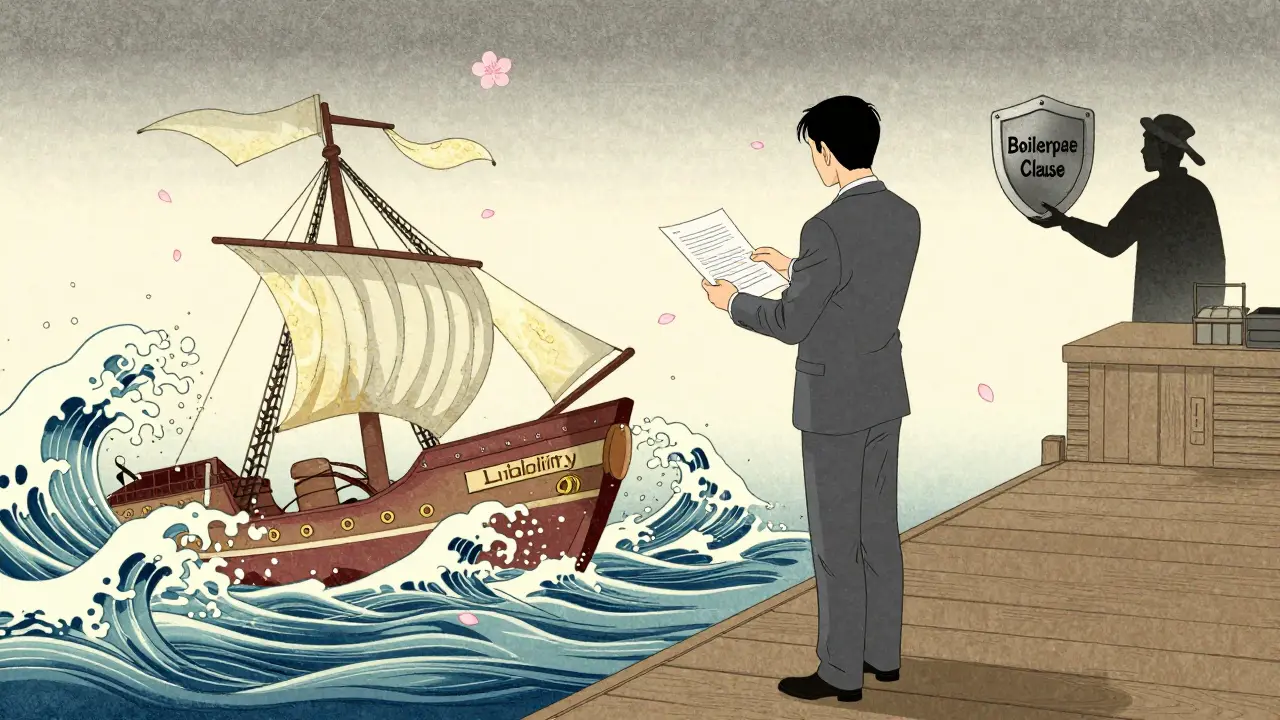
When you sign a contract-whether it’s for software, a service, or the sale of a business-you’re not just agreeing to deliver something or pay for it. You’re also agreeing to take on risk. And that’s where liability and indemnification come in. These aren’t just legal buzzwords. They’re the backbone of how businesses protect themselves when things go wrong.
Imagine this: You buy a piece of software from a vendor. Six months later, a data breach happens. Your customers’ personal info is exposed. You get sued. The vendor says, "That’s not our fault." But your contract says they’ll indemnify you. Now what? That’s not a hypothetical. It happens every day. And if you don’t understand what indemnification really means, you could be on the hook for hundreds of thousands of dollars-even if you didn’t cause the problem.
What Indemnification Actually Means
Indemnification is a promise. One party agrees to pay for the losses, costs, or legal fees of another party if something specific happens. It’s not insurance, but it acts like it. Think of it as a financial safety net woven into the contract.
The legal definition is simple: to indemnify means to compensate someone for losses they’ve suffered because of a defined event. According to Cornell Law School’s Legal Information Institute, it’s about covering damages tied to a specific accident, incident, or breach. In plain terms: if you’re hurt because of what the other side did, they pay.
But here’s the catch-it’s not automatic. It only kicks in if the contract says so, and only for what the contract says. That’s why the wording matters more than anything else.
The Seven Key Parts of an Indemnification Clause
Not all indemnification clauses are the same. A well-drafted one includes seven critical elements:
- Scope of Indemnification - What exactly is covered? Legal fees? Third-party lawsuits? Lost profits? Some contracts only cover direct damages. Others include everything, even indirect losses. Be specific.
- Triggering Events - What makes the obligation start? A breach of contract? A patent infringement? A data breach? A failure to comply with privacy laws? The clause must list these clearly. Vague triggers like "any claim" are dangerous.
- Duration - How long does the protection last? Some clauses expire when the contract ends. Others survive for years-especially for things like tax liabilities or IP infringement. In M&A deals, fundamental representations often survive 12 to 36 months.
- Limitations and Exclusions - No indemnification is unlimited. Most contracts cap the total amount one party can be forced to pay. They also exclude things like punitive damages or lost business opportunities. If you’re the buyer, you want fewer exclusions. If you’re the seller, you want more.
- Claims Procedure - How do you ask for money? Most contracts require written notice within 30 to 60 days. Miss the deadline? You might lose your right to claim. There’s also usually a requirement to let the indemnifying party control the legal defense.
- Insurance Requirements - Can the other side actually pay? If they’re promising to cover $5 million in damages but have no insurance, they’re just making empty promises. Good contracts require proof of insurance-like general liability or errors & omissions coverage-with limits matching the indemnity cap.
- Jurisdiction and Governing Law - Where will a dispute be settled? New York? California? New Zealand? The choice affects everything: legal costs, interpretation of terms, and even how enforceable the clause is.
Unilateral vs. Mutual Indemnification
Not all indemnity clauses are fair. Most are one-sided.
Unilateral indemnification means only one party pays. This is common in vendor-customer deals. For example, a software company agrees to defend and indemnify its client if the software violates someone else’s patent. The client doesn’t owe the vendor anything in return. This happens because the vendor has more control over the product-and therefore more risk.
Mutual indemnification means both sides promise to cover each other’s losses. This shows up in joint ventures, construction contracts, or partnerships where both parties have active roles. If a worker gets hurt on site, and it’s unclear who was at fault, each side covers the other’s liability. It’s balanced-but harder to negotiate.
Be careful. If you’re a small business signing a contract with a big corporation, you’re almost always the one being asked to indemnify them. Don’t assume it’s normal. Ask: "Why should I pay for their mistakes?"

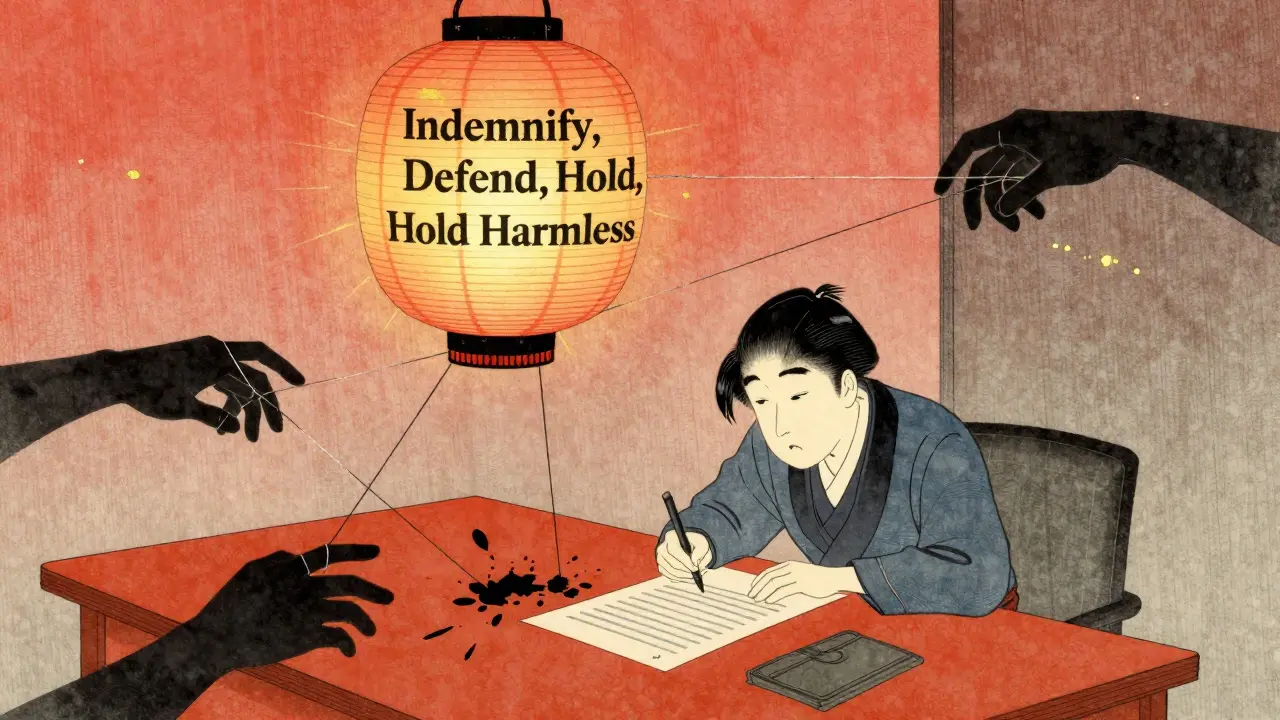
Indemnify, Defend, Hold Harmless: What’s the Difference?
Many contracts use all three terms together: "indemnify, defend, and hold harmless." But they mean different things-and courts treat them differently.
- Indemnify = Pay for losses. If you’re sued and lose $200,000, the indemnifying party gives you that money.
- Defend = Pay for legal fees. Even if you win the case, the other side covers your lawyer bills.
- Hold harmless = Don’t sue me back. If you’re protected under this clause, you can’t turn around and claim the indemnifying party caused your losses. It’s a two-way shield.
Some courts see "hold harmless" as redundant. Others treat it as a separate duty. That’s why lawyers advise using all three-it covers more ground. But if you’re the one being asked to provide this protection, you want to limit it. "Hold harmless" can trap you into accepting blame for things you didn’t do.
Why Sellers Always Lose the Negotiation
In mergers and acquisitions, indemnification clauses are the most heavily negotiated part of the deal-after price and representations. And sellers almost always end up with worse terms.
Why? Because buyers want protection. After closing, they can’t just walk away if something goes wrong. So they demand indemnity for:
- Breach of representations (e.g., "We own all the IP" - but you didn’t disclose a pending lawsuit)
- Breach of covenants (e.g., "We won’t hire away your staff for 12 months" - but you did)
- Pre-closing liabilities (e.g., unpaid taxes, environmental violations, employee claims)
Sellers often have to agree to a "basket" or "deductible"-a threshold before indemnification kicks in. For example: "Buyer can’t claim anything unless losses exceed $50,000." Then there’s a "cap"-the maximum they can recover, often 10% to 50% of the sale price.
But here’s the twist: "Fundamental representations" (like ownership of assets, authority to sell, tax status) usually have longer survival periods-sometimes up to three years. Non-fundamental ones (like employee benefits or contracts) might only survive 12 to 18 months. That’s why sellers fight hard to limit which reps are "fundamental."
Real-World Example: The Data Breach Trap
A New Zealand e-commerce company bought a customer relationship management (CRM) tool from a U.S.-based vendor. The contract included a standard indemnification clause: "Vendor will indemnify Buyer for any third-party claims arising from breach of security."
Two years later, the vendor’s system was hacked. 12,000 customer records were stolen. The New Zealand company faced:
- A $300,000 fine from the Privacy Commissioner
- Legal fees of $85,000
- Costs for credit monitoring for affected customers: $45,000
- Reputational damage leading to a 15% drop in sales
They filed a claim. The vendor refused, saying the breach was caused by the company’s own misconfigured firewall.
The contract didn’t say who was responsible for system configuration. The indemnification clause was too broad. The vendor argued the clause only covered their own negligence-not the buyer’s. The case settled for $150,000 after six months of legal back-and-forth.
Bottom line: Vague language = expensive risk.
What You Should Do Today
Don’t wait for a lawsuit to learn this lesson. Here’s what to do before signing any contract:
- Read the indemnification clause like a lawyer. Don’t skip it. Highlight every "shall," "will," and "including."
- Ask: "What’s the worst that could happen?" Then check if the clause covers it.
- Push for caps and deductibles. Never agree to unlimited liability.
- Require proof of insurance. Don’t trust promises. Ask for a certificate.
- Clarify who controls the defense. If the other side controls your legal team, they might settle for more than you’d agree to.
- Don’t accept boilerplate. Every contract is different. Your risk profile isn’t the same as someone else’s.
Indemnification isn’t about trust. It’s about paperwork. The best contracts don’t assume good intentions. They plan for bad outcomes.
Frequently Asked Questions
Is indemnification the same as insurance?
No. Insurance is a policy you buy from a company that pays out if something happens. Indemnification is a promise in a contract between two parties. One agrees to pay the other if a specific event occurs. Insurance can back up indemnification, but it’s not the same thing.
Can I get out of an indemnification clause if I didn’t read it?
No. Courts assume you read and understood the contract before signing. Ignorance is not a defense. If you sign a contract with an indemnification clause, you’re legally bound-even if you didn’t notice it.
What happens if the indemnifying party goes bankrupt?
Then you’re out of luck. Indemnification is only as good as the other party’s ability to pay. That’s why contracts often require proof of insurance or a letter of credit. If the other side is financially weak, negotiate for collateral or a third-party guarantee.
Are indemnification clauses enforceable in New Zealand?
Yes, as long as they’re clear, not unconscionable, and don’t violate public policy. New Zealand courts generally uphold commercial contracts, including indemnity clauses. But they won’t enforce clauses that try to shield someone from gross negligence or intentional harm.
Can I limit indemnification to direct damages only?
Absolutely. In fact, you should. Many contracts include "consequential damages"-like lost profits or reputational harm-which can be huge. Unless you’re the buyer in a high-risk deal, insist on limiting indemnity to direct, out-of-pocket losses only.
Why do some contracts say "to the fullest extent permitted by law"?
That phrase is a trap. It tries to make the clause as broad as possible, even beyond what’s normally allowed. Courts sometimes strike down such language if it’s too vague or overreaching. Always ask for specific limits instead of relying on vague legal phrases.
Next Steps
If you’re negotiating a contract right now, pause before signing. Ask your lawyer these three questions:
- What specific events trigger indemnification?
- Is there a cap? What’s the deductible?
- Does the other side have insurance that matches the risk?
If you’re the seller, push back on broad language. If you’re the buyer, don’t assume protection is automatic. The difference between a good contract and a costly mistake is in the details.

Darren Ramowski
My name is Calem Goodridge, and I am a pharmaceutical expert with a passion for educating others about medication and diseases. I have dedicated my career to researching and developing life-changing medical treatments. In my spare time, I enjoy writing articles and sharing my knowledge with the general public to help them make informed healthcare decisions. I am also an advocate for safe medication practices and believe that patient education is key to preventing adverse drug events. With my extensive experience in the pharmaceutical industry, I strive to make a positive impact on the lives of others through my writing.
Been there. Signed a contract with a SaaS vendor last year, thought their indemnity clause was solid. Turns out they only covered "direct damages" and excluded "reputational harm"-which is literally what cost us 40% of our customer base after the breach. Never sign anything without a lawyer reading the fine print. It’s not paranoia, it’s business.
Also, always ask for proof of E&O insurance. If they can’t produce it, they’re just buying you a false sense of security.
This is why small businesses get crushed. Vendors write these clauses to protect themselves, not you. That "hold harmless" language? It’s a legal trapdoor. If you’re the buyer, you’re essentially agreeing not to sue them even if they’re 100% at fault. That’s not a contract-it’s a surrender document. And if your lawyer says "it’s standard," run.
Stop normalizing one-sided risk transfer. It’s predatory.
People don’t realize indemnification clauses are often the only thing standing between them and financial ruin. I’ve seen startups sign away their future because they were too eager to close the deal. One founder I worked with agreed to unlimited liability for IP infringement-didn’t even know what IP stood for. Two years later, they got sued for $2.3M because a third-party plugin they used had a patent issue. The vendor walked away. The founder lost everything.
Indemnity isn’t a formality. It’s armor. And if you’re not wearing it, you’re naked in a warzone.
LOL at people who think "read the contract" is enough. 😅 Most people don’t even know what "consequential damages" means. I’ve literally had clients sign NDAs with indemnity clauses that included "loss of goodwill" and "emotional distress."
Pro tip: If the clause says "to the fullest extent permitted by law," it’s a red flag. That’s legalese for "we’re trying to cheat you."
Also, always demand a certificate of insurance. No paper? No deal. 💼🔐
Interesting read. In India, we see this a lot with offshore dev contracts. Vendors say they'll indemnify for bugs but then say "not if caused by client modifications." But they never define what "modifications" means. So you’re stuck.
Always get a sample clause reviewed by someone local. Laws vary even within countries.
Ugh. I just got off a call with a vendor who said "we don’t indemnify for data breaches unless it’s our fault." But how do you prove it’s their fault? They control the system. You don’t. That’s why they say that. They know you can’t prove it.
And don’t even get me started on the "defense control" clause. They pick your lawyer. They pick the settlement. You’re just a spectator. This isn’t protection-it’s hostage-taking.
Why do we keep letting corporations do this? 😒
Indemnification is a subset of risk allocation mechanisms in commercial contracts, predicated on the principle of allocative efficiency under the Coase Theorem. The asymmetry in bargaining power inherent in B2B transactions renders unilateral indemnity clauses Pareto-suboptimal, yet they persist due to information asymmetry and transaction cost minimization by dominant parties.
Moreover, the tripartite formulation-indemnify, defend, hold harmless-constitutes a non-redundant legal trinity under Restatement (Second) of Contracts § 302. Courts in jurisdictions like Delaware treat "hold harmless" as an independent covenant of non-recourse, not merely a synonym for indemnity.
Pro tip: Always insist on a carve-out for gross negligence and willful misconduct. Otherwise, you’re waiving statutory protections under UCC § 2-719.
Been negotiating a contract with a US vendor for our Aussie startup and this hit home. We pushed back on unlimited liability and they laughed. Said "everyone signs this." We said nope. Got them to cap it at 150% of contract value and add a 100k deductible. Also demanded proof of cyber insurance.
They came back with a 20 page amendment. Took 3 weeks. Worth every minute. Don’t let them rush you.
Also if they say "it’s standard" just say "so is smoking. Doesn’t make it okay."
Thank you for writing this. I’ve been in legal ops for 12 years and this is exactly what I tell new hires.
One thing I’d add: if the indemnity clause doesn’t specify who controls the defense, assume the other side will. And they’ll settle for way more than you’d ever agree to-just to get it over with. You don’t get a say.
Always insist on the right to approve counsel. Even if they say it’s "not negotiable." It is. You just have to be willing to walk away.
And if you’re the seller? Don’t let them make you indemnify for things you have zero control over. That’s not fair. That’s just greed.
Contracts are supposed to be fair. Not one-sided.