
Aminoglycoside Ototoxicity Risk Calculator
Low Risk
When you’re sick with a serious infection, antibiotics can feel like a lifeline. But for some people, the very drugs meant to save their lives can quietly destroy their hearing and balance - sometimes without warning. Aminoglycoside antibiotics, used for decades to fight life-threatening infections like sepsis, tuberculosis, and multidrug-resistant pneumonia, carry a hidden risk: aminoglycoside ototoxicity. This isn’t a rare side effect. It’s a predictable, often permanent injury that affects up to half of patients who receive these drugs. And too often, no one warns them before it’s too late.
How Aminoglycosides Damage Your Inner Ear
Aminoglycosides - including gentamicin, tobramycin, amikacin, and streptomycin - don’t just kill bacteria. They also slip into the inner ear, where they attack the delicate hair cells that turn sound and head movement into electrical signals your brain understands. These cells don’t grow back. Once they’re gone, the damage is permanent.
The drugs enter the inner ear through the bloodstream, crossing the blood-labyrinth barrier, or directly through the round window membrane if given locally. Once inside, they trigger a chain reaction: they overstimulate NMDA receptors, flood cells with nitric oxide, and generate free radicals that shred mitochondria - the powerhouses of the cell. This forces hair cells to die through both apoptosis (programmed death) and necrosis (uncontrolled destruction), unlike other ototoxic drugs like cisplatin, which mostly cause apoptosis alone.
The pattern of damage is specific. Hearing loss usually starts in the high frequencies - the sounds of birds chirping, children’s voices, or the "s" and "th" in speech. Over time, it spreads to lower frequencies, making conversations harder to follow. Vestibular damage, which affects balance, shows up as dizziness, unsteadiness, or a constant feeling of motion. In severe cases, people can’t walk without holding onto walls or experience vertigo so intense they vomit.
Who’s Most at Risk?
Not everyone who gets aminoglycosides loses their hearing. But some people are far more vulnerable - and they often don’t know it until it’s too late.
Genetics play a huge role. A mutation in the mitochondrial DNA - specifically the A1555G or C1494T changes in the 12S rRNA gene - makes hair cells hypersensitive to aminoglycosides. People with these mutations can go from a safe dose to total hearing loss after just one injection. The T1095C mutation increases gentamicin-induced cell death by 47%. Yet, most patients aren’t screened.
Other risk factors stack up. If you already have high-frequency hearing loss, you’re 3.2 times more likely to lose hearing in lower frequencies after treatment. Noise exposure - even loud music or construction noise weeks before or after the drug - boosts ototoxicity by up to 52%. Infections that cause inflammation (like sepsis or pneumonia) make the blood-labyrinth barrier leakier, letting 63% more drug into the inner ear. Kidney problems slow drug clearance, letting levels build up. And children, elderly patients, and those on long-term therapy (like for drug-resistant TB) face the highest risk.
Why Doctors Still Use These Drugs
Given how dangerous they are, why are aminoglycosides still in use?
Because for certain infections, they’re among the few options left. With rising antibiotic resistance, drugs like amikacin and gentamicin are often the last line of defense against superbugs. In low-resource settings - where newer, safer antibiotics are too expensive or unavailable - they’re the only choice. Globally, 80% of aminoglycoside use happens in places with no access to hearing tests or genetic screening.
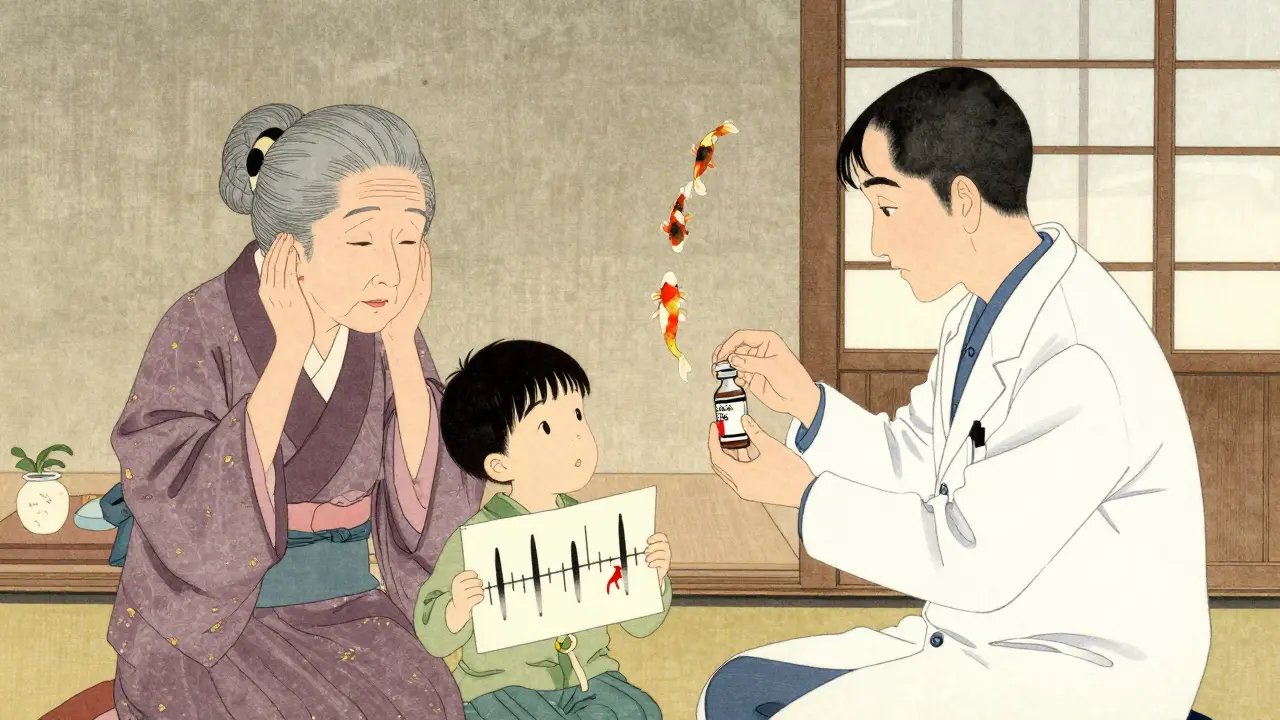
In high-income countries, they’re still used for severe cases: sepsis in newborns, cystic fibrosis flare-ups, and multidrug-resistant tuberculosis. But even there, use is declining as alternatives become available. The catch? Alternatives aren’t always better. Some are more toxic to the kidneys. Others cost ten times more. So doctors are stuck choosing between two bad options.
What’s Being Done to Prevent It?
There are tools - proven, reliable tools - that can prevent most cases of aminoglycoside ototoxicity. But they’re not being used.
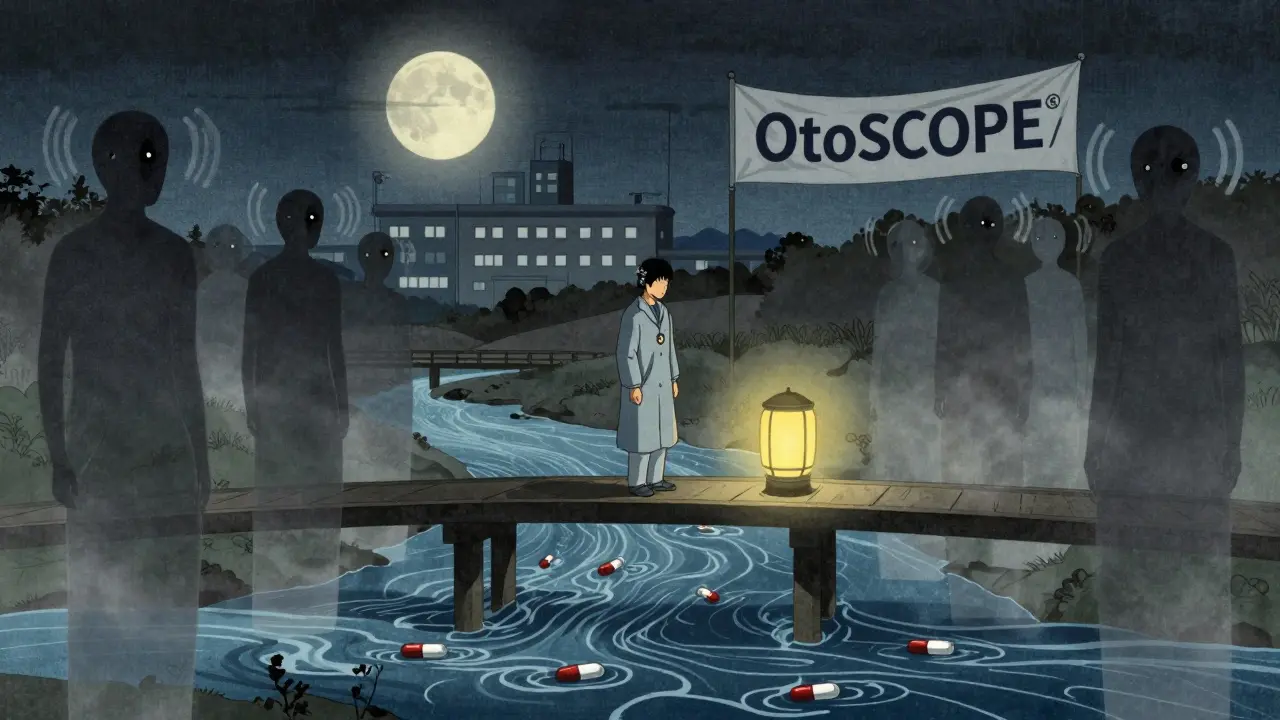
First, genetic screening. The OtoSCOPE® test can detect the A1555G and C1494T mutations with 94.7% accuracy. If you carry one, doctors can avoid aminoglycosides entirely and choose safer alternatives. Yet, only a handful of hospitals in the U.S. routinely offer it.
Second, hearing monitoring. Standard hearing tests (0.25-8 kHz) miss early damage. High-frequency audiometry (9-16 kHz) catches changes 5-7 days sooner. The American Speech-Language-Hearing Association recommends testing within 24 hours of starting treatment, then every 48-72 hours. But a 2022 survey found only 37% of U.S. hospitals have formal monitoring protocols.
Third, drug level monitoring. Keeping peak and trough blood levels within strict ranges reduces ototoxicity risk by 28%. It’s simple: draw blood before and after each dose. But it requires coordination between pharmacists, nurses, and doctors - something many busy wards can’t manage.
Even the FDA now requires black box warnings on all aminoglycoside labels. The European Medicines Agency recommends genetic screening for long-term use. But guidelines don’t change practice unless systems support them.
The Human Cost
Behind every statistic is a person.
A 34-year-old woman in Baltimore developed bilateral vestibular loss after 10 days of gentamicin for a urinary infection. She couldn’t walk without help. She lost her job. It took 14 months of daily vestibular rehab to stand without falling. She still can’t drive at night.
A child in India, treated with gentamicin for pneumonia, lost all hearing in both ears. His parents weren’t told about the risk. He’s now in a special school, learning sign language.
A 2022 survey of 217 patients on the Hearing Loss Association of America forum found 89% were never warned about ototoxicity before treatment. Seventy-four percent said their hearing loss destroyed their quality of life - worse than the original infection. On Reddit, 78% of 142 reported cases ended in permanent hearing loss. Sixty-three percent still have constant tinnitus.
This isn’t just a medical issue. It’s a failure of communication, systems, and prioritization.
What’s on the Horizon?
Hope is coming - but slowly.
ORC-13661, a new otoprotectant, showed 82% hair cell preservation in Phase II trials when given with amikacin. It’s now in Fast Track review by the FDA. If approved, it could be injected into the middle ear during treatment, shielding hair cells without interfering with the antibiotic’s effect.
Gene therapy is also being explored. The Hearing Restoration Project, backed by $28.7 million in funding, is testing ways to fix mitochondrial mutations in the inner ear. Early mouse studies cut ototoxicity by 67%.
But the biggest breakthrough might be simpler: personalized medicine. By combining genetic screening, real-time drug monitoring, and high-frequency audiometry, we could reduce ototoxicity by 50-70% in the next decade. The technology exists. The question is whether we’ll use it.
What You Can Do
If you or a loved one is being prescribed an aminoglycoside:
- Ask: "Is there a safer alternative?"
- Ask: "Have you considered genetic screening for mitochondrial mutations?"
- Ask: "Will you be doing baseline and regular hearing tests?"
- Ask: "Will you be monitoring drug levels in my blood?"
- Avoid loud noise during and for at least 3 weeks after treatment.
- Report any ringing in the ears, muffled hearing, or dizziness immediately - don’t wait.
Don’t assume your doctor knows. Many don’t. A 2023 survey of U.S. clinicians showed only 41% routinely check for ototoxicity risk factors. You may be your own best advocate.
Why This Matters Beyond the Individual
Aminoglycoside ototoxicity isn’t just a personal tragedy. It’s a public health crisis.
With antibiotic resistance rising, we’ll need these drugs longer. But if we keep using them blindly, we’ll create a generation of people with preventable hearing and balance disorders - burdening healthcare systems, schools, and families. In low-income countries, where 80% of use happens, there’s no monitoring, no screening, no warning. The cost isn’t just measured in dollars. It’s measured in silence, in lost jobs, in children who can’t hear their mothers call their names.
Fixing this isn’t about developing new drugs. It’s about using what we already know. Screening. Monitoring. Education. Systems change. We have the science. We just need the will.

Darren Ramowski
My name is Calem Goodridge, and I am a pharmaceutical expert with a passion for educating others about medication and diseases. I have dedicated my career to researching and developing life-changing medical treatments. In my spare time, I enjoy writing articles and sharing my knowledge with the general public to help them make informed healthcare decisions. I am also an advocate for safe medication practices and believe that patient education is key to preventing adverse drug events. With my extensive experience in the pharmaceutical industry, I strive to make a positive impact on the lives of others through my writing.
Man, I had no idea a simple antibiotic could wreck your ears for life. I remember my uncle getting gentamicin after surgery and suddenly he couldn’t hear the TV anymore. We thought he was just getting old. Turns out, it was the drugs. This post hit me right in the gut. Why isn’t this common knowledge? Like, if you’re gonna inject someone with a chemical that can blind or deafen them, shouldn’t there be a warning label bigger than a billboard?
And the fact that genetic screening exists but only a few hospitals use it? That’s not negligence-it’s a system failure dressed up as tradition. We screen for everything from Down syndrome to cancer risk, but we’ll let grandma get blasted with ototoxic drugs like it’s a game of Russian roulette. The science is here. The tools are here. We just don’t care enough until it’s too late.
bro i got amikacin for a bad UTI in 2020 and my ears have been ringing ever since. no one told me this could happen. i just thought it was stress or something. now i cant hear my dog barking properly and i hate it. why do docs just hand these out like candy? i feel like i got scammed by the medical system. also tinnitus is the worst roommate ever.
Of course the FDA adds a black box warning but does NOTHING to enforce screening. This is all part of the Pharma-Doctors-Insurance cabal. They don’t want you screened because then they’d have to use expensive alternatives-and who profits from that? The same people who pushed Vioxx and opioids. They’d rather you go deaf than lose a dime. Wake up. This isn’t medicine. It’s profit-driven harm with a white coat.
And don’t get me started on how they don’t test kids in India. That’s not negligence-that’s eugenics by omission. They’re just letting the poor pay the price so the rich can keep their profits. You think this is an accident? No. It’s business.
Did you know aminoglycosides bind to mitochondrial ribosomes like a key in a lock? The A1555G mutation alters the rRNA conformation, creating a high-affinity binding pocket that amplifies ROS production 400%? It’s not just ototoxicity-it’s targeted mitochondrial sabotage. And they’re still using it? The fact that we’re not using CRISPR-based mitochondrial correction or nanoliposomal delivery to bypass the labyrinth barrier is a failure of translational bioengineering on a systemic level. We have the tech. We have the data. We just lack the will. Or the funding. Or the courage. Pick one.
It’s honestly embarrassing that we’re still having this conversation in 2025. We have the ability to prevent permanent disability in 70% of cases, yet we’re still playing Russian roulette with people’s hearing. And let’s be real-this disproportionately affects the marginalized. Poor kids in India, elderly patients in rural clinics, uninsured folks in the Midwest. It’s not a medical issue. It’s a moral one. If your hospital doesn’t have a hearing monitoring protocol, you shouldn’t be allowed to prescribe aminoglycosides. Period.
I’m not even mad. I’m just… disappointed. We’re better than this. We’ve cured cancer. We’ve landed on Mars. But we can’t protect people’s ears? Pathetic.
America’s healthcare system is a circus. You get a life-saving drug? Cool. But if you lose your hearing? That’s your fault for not asking the right questions. Meanwhile, doctors are overworked, underpaid, and told to move patients through like a conveyor belt. But hey, at least we’ve got the FDA warning now. Right? Right??
Meanwhile, China and India are pumping out aminoglycosides like soda pop because it’s cheap. So now we’ve got a global epidemic of preventable deafness-and the WHO just shrugs. This isn’t science. This is capitalism with a stethoscope.
The statistical prevalence of ototoxicity in high-risk cohorts exceeds 45% in multiple longitudinal studies, yet clinical adoption of high-frequency audiometry remains below 40% in tertiary institutions. This represents a critical gap between evidence-based practice and implementation. Furthermore, the cost-benefit analysis of routine genetic screening demonstrates a net societal savings of $12,000 per prevented case of permanent hearing loss. The failure to implement these protocols constitutes a violation of the standard of care in otolaryngology and pharmacovigilance. This is not anecdotal-it is systemic.
Oh wow, you mean the same drugs that almost killed my cousin because the doctor didn’t check her kidney levels… also made her deaf? Shocking. I guess we should’ve known better than to trust the people who also told us hydroxychloroquine was a miracle cure.
At least now we know: medicine is just a game of ‘guess which organ we’ll break today.’
This is one of the most well-researched, human-centered pieces I’ve read on medical ethics in years. The data is staggering, but the stories? Those are what stick with you. That child in India who can’t hear his mother… that’s the cost of ignoring science for convenience. We need policy change, yes-but we also need culture change. Doctors need to be trained to see patients as people, not cases. And patients need to feel empowered to ask, ‘What else can we try?’
Let’s not wait for another generation to lose their hearing before we act. The tools are here. The will? That’s up to us.
Of course you’re going to lose your hearing. You didn’t pay $20,000 for a ‘premium antibiotic package’ with the hearing protection add-on, did you? Of course not. You just wanted to live. And now you’re paying the price-in silence.
Meanwhile, the pharmaceutical reps are sipping champagne in Zurich, laughing about how easy it is to sell a drug that causes permanent disability… and then bill insurance for the rehab. Genius. Pure genius.
I’ve been thinking about this post all day. It’s not just about hearing. It’s about identity. The way your voice sounds when you speak. The sound of rain on your window. Your kid’s laugh. That song you danced to at your wedding. All gone. Because someone didn’t check a gene. Because a hospital didn’t have the budget. Because we’ve been trained to trust doctors without asking questions.
We’re not just losing ears-we’re losing moments. And no amount of ‘FDA warning’ can bring back the silence between a mother and her child who can’t hear her say ‘I love you.’
That’s the real tragedy. Not the statistics. The silence.
I’m just sitting here wondering how many people have been quietly losing their hearing over the last 20 years and never connected it to an antibiotic. I know someone who’s been dizzy since 2018. She thought it was stress. Now I’m scared to even take an antibiotic.
Maybe we should all carry a little card in our wallet: ‘I may be allergic to aminoglycosides. Ask me before giving me gentamicin.’
They say ‘first, do no harm.’ But apparently, if you’re poor, or brown, or old, or just unlucky enough to have a mutation your doctor never heard of… then harm is just a side effect of doing your job.
Meanwhile, someone’s getting a bonus for hitting their ‘antibiotic usage targets.’
What kind of world are we living in?
life is just a series of small tragedies we didn't see coming 😔
we fix broken bones, but not broken ears. weird, right?
ORC-13661 is a joke. Phase II trials? That’s not a cure-that’s a marketing campaign. The real problem isn’t the drug. It’s the entire medical-industrial complex. They don’t want otoprotectants approved because then they’d lose the billion-dollar rehab industry. Hearing aids. Cochlear implants. Therapy. Insurance billing codes. All of it depends on people staying broken.
And don’t get me started on how they’ll charge $100,000 for ORC-13661 once it’s approved. The same people who let you go deaf will then sell you the ‘solution’ at a 3000% markup. Capitalism doesn’t care if you hear. It just cares if you pay.