
Every year, thousands of children end up in emergency rooms because their parents gave them too much of a medicine - not because they meant to, but because they didn’t know they were giving the same thing twice. It sounds simple: read the label, give the right dose. But when you’re tired, stressed, or juggling multiple kids, it’s easy to mix up what’s in each bottle. Active ingredients are the real culprits behind most double dosing accidents, and most parents don’t even know what to look for.
Why Double Dosing Happens (and Why It’s Dangerous)
Double dosing doesn’t always mean giving two full doses. Sometimes it’s as simple as giving a fever reducer and a cold medicine that both contain acetaminophen. Or giving a sleep aid and a cough syrup that both have diphenhydramine. These aren’t rare mistakes - a 2016 study in Pediatrics found that 21% of parents have accidentally given their child too much medicine at least once. And the numbers keep climbing. Children, especially those under 5, are more vulnerable because their bodies process medicine differently. A dose that’s safe for an adult might be dangerous for a 20-pound toddler. For example, acetaminophen (also called paracetamol or APAP) has a very narrow safety window. Giving more than 150 mg per kilogram of body weight can cause serious liver damage. And here’s the scary part: many common cold and flu products contain acetaminophen. NyQuil, Theraflu, Vicks DayQuil, and even some children’s allergy syrups all have it. Parents think they’re giving something different - but the active ingredient is the same. Ibuprofen is another big one. It’s in Advil, Motrin, and many combination cold formulas. If you give Motrin for fever and then give a nighttime cold medicine later that night, you might be doubling up without realizing it. And when you mix acetaminophen and ibuprofen to alternate doses - which some parents think is safer - you actually increase the risk of error by 47%, according to the American Academy of Family Physicians.The Most Common Culprits: What to Look For
There are only a few active ingredients that cause the majority of double dosing incidents. If you know these, you can avoid 90% of the risks.- Acetaminophen (also listed as APAP, paracetamol, or N-acetyl-p-aminophenol) - found in Tylenol, Excedrin, NyQuil, Theraflu, Vicks, and many children’s cold and flu products.
- Ibuprofen - found in Advil, Motrin, and many multi-symptom cold medicines.
- Diphenhydramine - an antihistamine in Benadryl, Children’s NyQuil, and some nighttime cough syrups. It causes extreme drowsiness and can be dangerous if combined with other sedatives.
- Pseudoephedrine - a decongestant in Sudafed, Claritin-D, and some cold formulas. Can raise heart rate and blood pressure.
- Dextromethorphan - a cough suppressant in Robitussin, Delsym, and many OTC cough syrups. Overdose can cause hallucinations and seizures in kids.
How to Check Active Ingredients - A Simple System
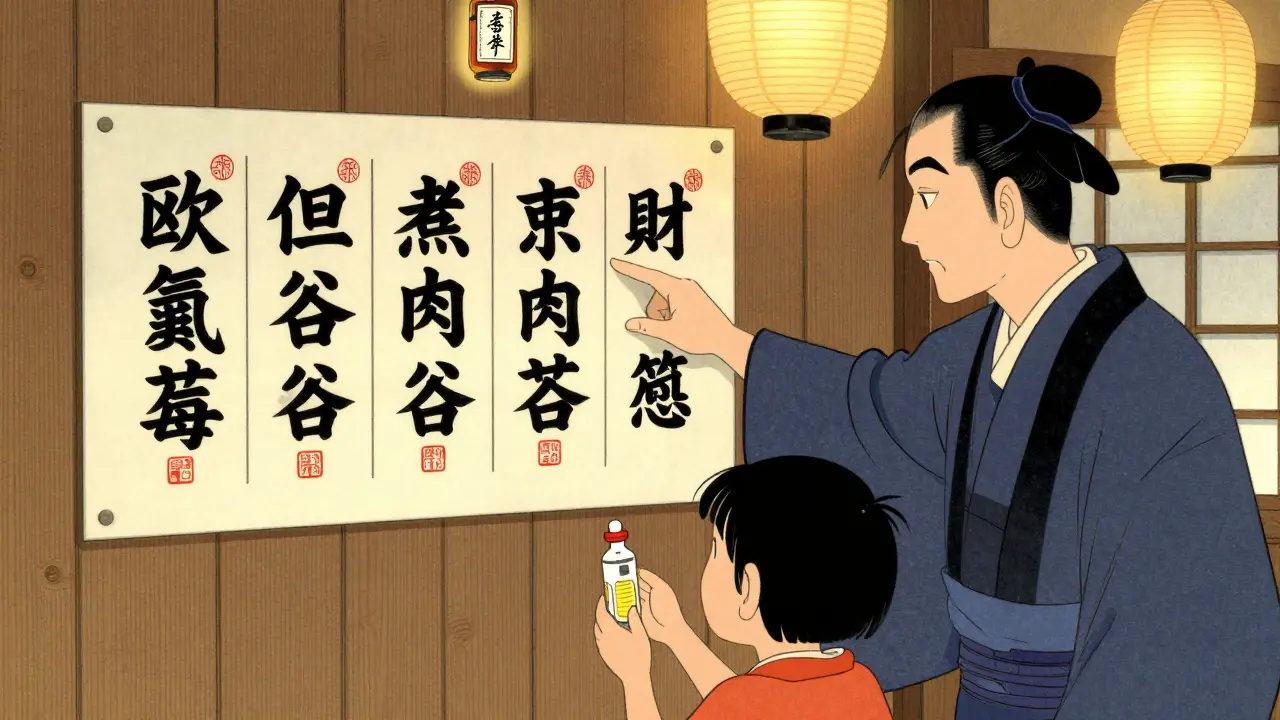
The easiest way to avoid double dosing is to make checking active ingredients a habit. Here’s how:- Read the label before you give anything. Don’t just look at the brand name. Flip the bottle. Look for the section that says “Active Ingredients.” That’s where the real info is.
- Write it down. Keep a small list in your phone or on a sticky note near the medicine cabinet. Note the medicine name, active ingredient, strength (e.g., 160 mg/5 mL), and time given. Update it every time you give a dose.
- Use the measuring tool that comes with the medicine. Household teaspoons vary wildly - some hold as little as 2.5 mL, others as much as 7.5 mL. The FDA says this is why 30% of dosing errors happen. Always use the dropper, syringe, or cup that came with the bottle.
- Assign one person to give medicine. If two caregivers are involved, one person handles all doses. No exceptions. Communication gaps cause 38% of double dosing incidents.
- Ask the pharmacist. When you pick up a new medicine, ask: “Does this have the same active ingredient as [insert medicine name]?” Most pharmacists now offer printed dosing charts with active ingredients highlighted. Use them.
What About Combination Medicines?
The bigger problem today isn’t single medicines - it’s combination products. A single bottle of “Children’s Cold & Flu” might contain acetaminophen, dextromethorphan, and pseudoephedrine. That’s three active ingredients in one dose. If you give that and then also give a separate fever reducer, you’re likely overdosing. The American Academy of Pediatrics says: Don’t use combination cold medicines in children under 6. They don’t work well, and they’re risky. If your child has a runny nose, a cough, and a fever - treat one symptom at a time with a single medicine. Don’t reach for the “everything in one” bottle.Real Stories, Real Consequences
One mother on Reddit shared that her 3-year-old became unresponsive after getting Benadryl for allergies and then a cough syrup with diphenhydramine two hours later. She didn’t know both had the same ingredient. Her child was rushed to the ER and spent the night under observation. Another parent, a nurse, accidentally doubled her 2-year-old’s acetaminophen dose because she gave Tylenol for fever, then gave a nighttime cold syrup without checking the label. She later said: “I thought I was being careful. I didn’t even think to look at the active ingredients.” But there are success stories too. One dad, who works in pharmacy, created a simple chart of all the medicines in his house, listed the active ingredients, and laminated it. He now keeps it on the fridge. Since then, he hasn’t had a single dosing error. His family’s error rate dropped to zero.
What’s Changing? New Tools and Rules
The FDA is starting to step in. By December 2025, all OTC children’s medicines must list active ingredients in bold, standardized format. No more hiding them in tiny print. And in January 2024, the American Academy of Pediatrics launched the “Know Your Ingredients” campaign - with new icons on packaging to help parents spot acetaminophen, ibuprofen, and diphenhydramine at a glance. Some apps like Medisafe and Round Health now scan barcodes and warn you if you’re about to double up. Amazon Pharmacy’s “MedCheck” feature does the same when you order online. Early data shows these tools have prevented over 12,000 potential overdoses in just six months. But technology alone won’t fix this. The real solution is awareness. You don’t need an app. You don’t need to be a pharmacist. You just need to look at the label - every time.What to Do If You Think You’ve Double Dosed
If you realize you gave your child too much medicine:- Don’t wait for symptoms.
- Call Poison Control immediately: 1-800-222-1222.
- Have the medicine bottle ready - they’ll need the active ingredient and strength.
- Do not induce vomiting unless told to.
Double dosing isn’t about being careless. It’s about not knowing what to look for. Once you learn the five key active ingredients, and make checking them part of your routine, you’ve done more than most parents. You’ve protected your child.
What’s the most common active ingredient that causes double dosing in children?
Acetaminophen (also called paracetamol or APAP) is the most common cause of double dosing in children. It’s found in over 200 different OTC products, including Tylenol, NyQuil, Theraflu, and many children’s cold and flu syrups. Because it’s in so many products, parents often don’t realize they’re giving it twice - especially when using combination medicines.
Can I alternate acetaminophen and ibuprofen to reduce fever?
While some parents alternate acetaminophen and ibuprofen thinking it’s safer, research shows this increases the risk of double dosing by 47%. It’s harder to keep track of timing, and caregivers often misremember which medicine was given last. The American Academy of Pediatrics recommends using one medicine consistently unless directed by a doctor. If you do alternate, write down each dose and time to avoid confusion.
Are children’s liquid medicines always the same strength?
No. Strengths vary widely. For example, children’s acetaminophen can be 160 mg per 5 mL, 80 mg per 1 mL, or even 120 mg per 5 mL. Ibuprofen can be 50 mg per 1.25 mL or 100 mg per 5 mL. Always check the label. Never use an adult dose or a different product’s measuring tool. The only safe way is to use the device that came with the medicine.
Why do some medicines have different names for the same ingredient?
Acetaminophen is listed under 15 different names, including paracetamol, APAP, and N-acetyl-p-aminophenol. This confusion is intentional - manufacturers use different terms to make products seem unique. But they’re the same chemical. If you see any of these names on a label, treat them as the same active ingredient. Always look for the chemical name, not the brand.
Do I need to check active ingredients for prescription medicines too?
Yes. Many prescription medications for children - like ADHD drugs or antibiotics - can interact with OTC medicines. For example, giving a child with ADHD a cold medicine containing pseudoephedrine while on methylphenidate can raise heart rate dangerously. Always tell your pediatrician or pharmacist about every medicine your child takes - even herbal supplements and vitamins.

Darren Ramowski
My name is Calem Goodridge, and I am a pharmaceutical expert with a passion for educating others about medication and diseases. I have dedicated my career to researching and developing life-changing medical treatments. In my spare time, I enjoy writing articles and sharing my knowledge with the general public to help them make informed healthcare decisions. I am also an advocate for safe medication practices and believe that patient education is key to preventing adverse drug events. With my extensive experience in the pharmaceutical industry, I strive to make a positive impact on the lives of others through my writing.
Just wanted to say I started writing down active ingredients on a sticky note after reading this - game changer. I used to just grab whatever looked right, but now I check every bottle like it’s a bomb defusal mission. My 4-year-old hasn’t had a fever med accident since. Seriously, it’s that simple.
Also, the measuring cup that comes with the bottle? Never use a spoon. Ever. I learned that the hard way.
I’ve been a stay-at-home dad for six years and let me tell you - this whole double-dosing thing is way more common than people admit. I remember one night, I gave my daughter Tylenol for fever, then gave her a cold syrup an hour later because she was coughing. Didn’t even think to check the label. Next thing I know, she’s glazed over, barely responsive. We rushed to the ER. Turns out, both had acetaminophen. They kept her overnight. I cried in the parking lot after we left.
Now I keep a laminated chart on the fridge. Same one the pharmacist made me. I don’t care how silly it looks - I’d rather look silly than lose my kid over a typo on a bottle.
People are so careless with their children’s lives. You think you’re being smart by using "natural" remedies or mixing medicines because "it works better." Newsflash - your body isn’t a chemistry lab. You’re not a genius for juggling five different syrups. You’re a danger to your own child.
And don’t even get me started on parents who use adult doses "because it’s just a little more." Your kid isn’t a small adult. They’re a fragile little organism. If you can’t read a label, maybe you shouldn’t be in charge of medicine. Period.
This is why Britain has stricter labeling laws. Here in the US, it’s like every drug company is trying to trick parents into overdosing their kids. I mean, seriously - why does acetaminophen need 15 different names? It’s not a marketing ploy, it’s a trap.
And don’t even get me started on how the FDA is only acting now. Took them decades to do something basic. Meanwhile, kids are getting liver damage because some CEO thought "APAP" looked more premium than "acetaminophen."
One thing no one talks about - pharmacies don’t always warn you. I asked my pharmacist about interactions and she just shrugged and said, "It’s OTC, you should know."
That’s not good enough. If you’re selling medicine to parents who are exhausted and stressed, you owe them a clear warning. Not just a tiny line in fine print. I’ve started printing out the active ingredients list and taping it to the bottle. It’s dumb, but it works.
Let’s be honest - this whole thing is a symptom of American parenting culture. We over-medicate, over-diagnose, and then act shocked when our kids get sick from the medicine. You want to prevent double dosing? Stop giving medicine for every sniffle. Let the kid rest. Let their immune system work.
And if you’re using combination cold medicines for a 3-year-old - you’re not a parent. You’re a liability.
Also, "dextromethorphan"? That’s not medicine. That’s a party drug. Why is it even in children’s products? Someone needs to get fired.
I’m so glad this got shared. I almost did this last month. Gave my son Motrin for fever, then gave him a nighttime cold syrup because he was coughing. I just assumed it was "just a cough syrup." Then I saw the label - ibuprofen. I nearly threw up. I’ve been so scared since.
Now I have a little checklist taped to the medicine cabinet. And I use the app Medisafe. It’s saved me twice already. 😅🙏
Why are we even talking about this? Why not just ban all OTC children’s medicine? The real problem isn’t parents - it’s the pharmaceutical industry. They design products to be confusing. They use fake names. They market them like candy.
And now they’re adding "icons"? Like that’s going to fix it? They’re not going to stop until we outlaw this entire category. Until then, every child is a statistic waiting to happen.
Let me tell you something they don’t want you to know - this isn’t about ignorance. It’s about control.
The FDA, the AAP, the drug companies - they all profit from this confusion. If parents knew how to read labels, they’d stop buying combination products. And guess what? That’s where the real money is. So they keep the labels messy. They keep the names hidden. They keep the warnings tiny.
And now they’re pushing apps? That’s not safety - that’s surveillance. You think your phone is helping you? It’s tracking your child’s meds, your habits, your fears. It’s all part of the system.
Don’t trust the system. Trust your gut. And if you’re going to give medicine - do it the old way. Handwritten notes. No apps. No barcodes. Just you, the bottle, and your brain.
They want you dependent. Don’t let them win.
Man, I love how this post turned into a public service announcement. I’m a pharmacy tech, and I’ve seen it all - parents giving Tylenol and Robitussin together because "they’re different colors." Or using a tablespoon because "the little cup got lost."
But here’s the thing - most of these parents aren’t dumb. They’re tired. They’re overwhelmed. They’re juggling jobs, kids, laundry, and a million other things. We don’t need to shame them. We need to make it easier.
That’s why I started handing out little laminated cards at the counter: "Active Ingredients to Watch For." Just five names. Big font. No jargon. I’ve given out 300+ so far. Not one parent has thanked me - but I’ve seen them taping them to the fridge. That’s enough.
Just wanted to say - thank you for writing this. I’ve been so scared since my daughter had that reaction last year. I thought I was being careful. I wasn’t. I didn’t know about diphenhydramine being in both Benadryl and nighttime cough syrup. I felt like the worst parent ever.
But reading this? It didn’t make me feel stupid. It made me feel empowered. I’ve got my list on the fridge now. And I even showed my mom. She’s 68 and didn’t know either. We’re learning together. That’s what matters.
Knowledge is power - but only if you use it. 🌟
This post isn’t just about medicine. It’s about awareness. About slowing down. About being present in the chaos of parenting. Every time you read a label, you’re saying: "My child matters."
It’s not about perfection. It’s about intention. One bottle. One check. One moment of mindfulness. That’s how you protect them.
And if you’re reading this and you’ve made a mistake? You’re not alone. You’re human. Now go check your medicine cabinet. I believe in you. 💪❤️
Let me cut through the noise - acetaminophen is the #1 killer here. Not because it’s dangerous. Because it’s everywhere. And parents don’t know what they’re holding.
Here’s the truth: if you give a 20lb toddler 160mg every 4 hours for 3 doses, you’re at 480mg. Safe? No. The limit is 150mg/kg. That’s 1360mg total. So you’re under? Wrong. You’re not measuring right. You’re using a spoon. You’re giving it with food. You’re not factoring in weight.
Stop trusting your gut. Start trusting the math. And if you can’t do the math - don’t give the medicine. Call Poison Control. They’ll tell you. They’re not there to judge. They’re there to save lives.
Also - I just realized I forgot to mention: if you’re using a generic brand, always check the active ingredient. Sometimes the store brand has a different concentration than the name brand. I learned that the hard way after my kid got sick again. Same medicine. Different bottle. Different strength. Don’t assume. Always check.