
Dry Eye Lubricant Selector
Choose the right artificial tears based on your symptoms and lifestyle. This tool uses clinical recommendations from the article to match you with the best products.
Your Recommendation
Recommended Lubricant
Why this works for you
Usage
Key Ingredient
Millions of people wake up with gritty, burning eyes-not because they didn’t sleep well, but because their tear film is failing. Dry eye isn’t just discomfort; it’s a chronic condition that messes with vision, focus, and daily life. If you’re on medications that dry out your eyes-like antihistamines, antidepressants, or blood pressure pills-you’re not alone. And if you’ve tried cheap eye drops that burn or fade too fast, you know how frustrating it is. The good news? There’s a clear, science-backed way to manage this. It starts with the right lubricants and ends with smarter environmental fixes, like humidifiers.
What’s Really Going On With Your Eyes?
Your eyes don’t just need moisture-they need a balanced tear film. That film has three layers: oil, water, and mucus. When any one of them breaks down, your eyes dry out. About 86% of dry eye cases are evaporative, meaning your oil layer is thin or gone. That’s why slapping on plain water-based drops often doesn’t help long-term. Your tears just evaporate again in minutes. The real fix isn’t just adding liquid-it’s restoring the barrier that holds it in.Over-the-Counter Lubricants: Not All Eye Drops Are Equal
You’ve probably seen dozens of artificial tears on the shelf. But they’re not all the same. Low-viscosity drops like Refresh Tears or Systane Ultra have thin formulas. They give quick relief-perfect for mild dryness during the day. But they last only 1 to 2 hours. If you’re staring at a screen all day, you’ll be reapplying every hour. For moderate to severe dry eye, high-viscosity gels like Refresh Celluvisc or GenTeal Gel are better. They stick around longer-up to 6 hours-but blur your vision briefly after use. That’s why most people use them at night. If you’re using them during the day, apply just one drop and blink slowly. Too much = blurry vision. The key ingredient to look for? Sodium hyaluronate. It’s a naturally occurring molecule that holds water like a sponge. Drops with 0.1-0.4% sodium hyaluronate are more effective than those with just carboxymethylcellulose. And avoid drops with preservatives like benzalkonium chloride (BAK). They can irritate your eyes over time. Look for “preservative-free” single-dose vials if you’re using drops more than four times a day.Prescription Lubricants: When OTC Isn’t Enough
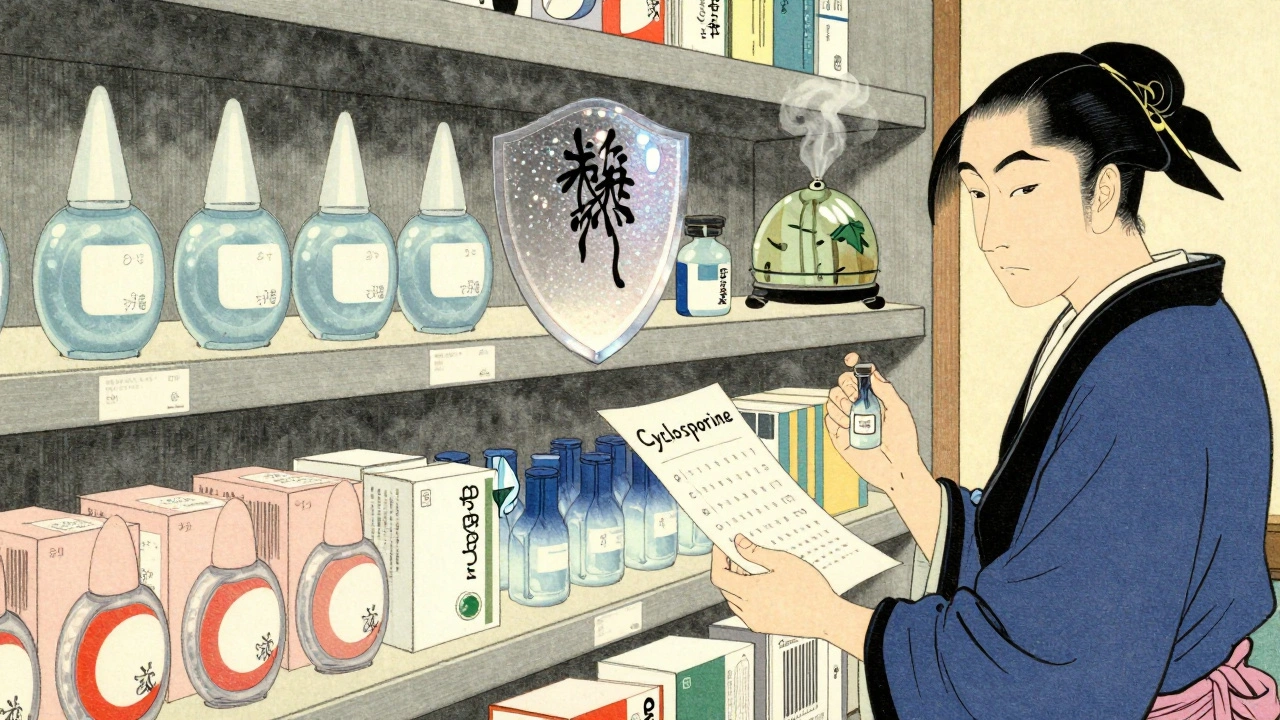
If your dry eye is caused by inflammation-common in people with autoimmune conditions or long-term screen use-OTC drops won’t fix the root problem. That’s where prescription medications come in. Cyclosporine (generic Restasis) is the most common. It’s not a lubricant-it’s an anti-inflammatory. It works by calming down the immune system’s attack on your tear glands. But here’s the catch: it takes 3 to 6 months to work. If you expect instant relief, you’ll get discouraged. Studies show it improves tear production by 13.9 points on the OSDI scale after six months. But 17% of users quit because of the burning sensation when they first start. Lifitegrast (Xiidra) works faster. It blocks a specific inflammatory signal in just 2 weeks. About 25% of users feel stinging right after applying it, but that usually fades. It’s a good middle ground if you need relief before 6 months. Miebo (perfluorohexyloctane) is the newest. Approved in 2023, it’s not a drop you absorb-it’s a shield. This semifluorinated alkane forms a thin, invisible film over your eye, stopping tears from evaporating. You feel relief within minutes. In clinical trials, patients reported 1.5 times less dryness than with placebo after just 15 days. Only 0.16% stopped using it due to side effects. The downside? It costs around $650 for a 30-day supply. Insurance often requires you to try cheaper options first.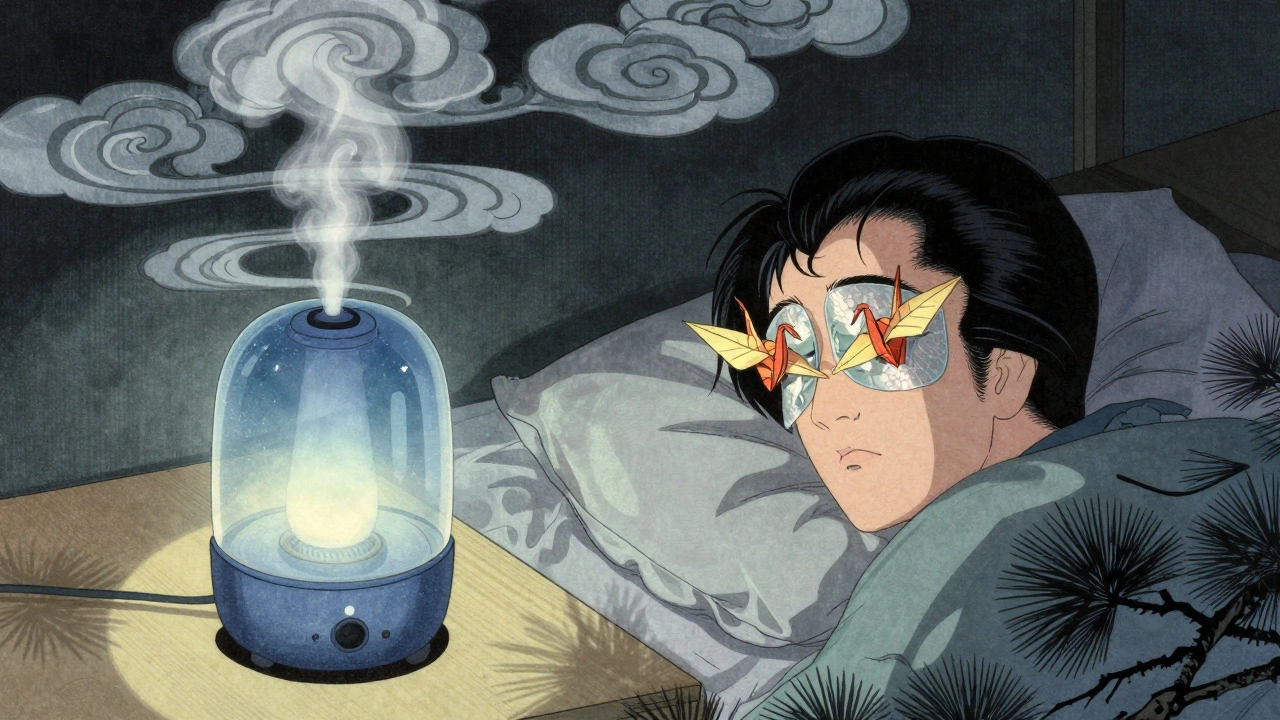
Humidifiers: The Silent Game-Changer
You don’t need fancy tech to help your eyes. A simple humidifier in your bedroom can make a huge difference. Dry air-especially from heating systems in winter or air conditioning in summer-pulls moisture out of your eyes while you sleep. That’s why so many people wake up with red, scratchy eyes. A 2024 survey of 342 dry eye patients found that 72% saw better nighttime symptoms when using a humidifier set between 40% and 60% humidity. That’s not a coincidence. Your tear film evaporates slower in moist air. You don’t need a smart humidifier with app control. A basic cool-mist model from a pharmacy works fine. Clean it weekly with vinegar and water to prevent mold. Place it near your bed, not directly on your nightstand-too close can cause condensation on your face. Combine a humidifier with a warm compress before bed. Heat helps unclog the oil glands in your eyelids. Do this for 5-10 minutes, then gently massage your eyelids. It’s a simple routine, but it boosts the effectiveness of any lubricant you use.What Works Best Together?
The most successful dry eye plans combine multiple tools. Here’s what real patients are doing:- Morning: Preservative-free artificial tears (low viscosity)
- Afternoon: Reapply if needed, or use a gel if screen time is heavy
- Night: Cyclosporine or lifitegrast drops + warm compress + humidifier running
- On bad days: Miebo for instant relief, then resume prescription drops the next day
Common Mistakes and How to Avoid Them
Most people fail at dry eye management not because the treatments don’t work-but because they use them wrong.- Using drops too often: More than 4-6 times a day with preserved drops can irritate your eyes. Switch to preservative-free if you need more.
- Not waiting after drops: If you wear contacts, wait 10-15 minutes after using most drops before putting them back in. For Miebo, wait 30 minutes.
- Skipping the prescription: If your dry eye is inflamed, OTC drops won’t fix it. Talk to your eye doctor about cyclosporine or lifitegrast.
- Ignoring humidity: A humidifier isn’t optional if you’re in a dry climate or use AC/heating regularly.
- Expecting instant results: Cyclosporine takes months. If you quit after 2 weeks, you’ll never know if it could’ve worked.
Cost, Insurance, and Access
Let’s be honest-dry eye meds are expensive. Generic cyclosporine costs $150-$250 a month. Miebo? $650. Xiidra? Around $500. Insurance often requires step therapy: you must try cheaper options first. Here’s how to navigate it:- Ask your doctor for samples. Many pharma reps still give them out.
- Use GoodRx or SingleCare coupons. They can cut the price of Miebo by 30-50%.
- Ask about patient assistance programs. Allergan and Bausch + Lomb offer free medication for qualifying low-income patients.
- Consider generic cyclosporine. It’s just as effective as brand-name Restasis.
What’s Next for Dry Eye Treatment?
The field is moving fast. New drugs like Reproxalap (expected FDA approval in late 2024) target inflammation at the source. Nasal sprays like Tyrvaya stimulate tear production through nerve reflexes. TearLab’s osmolarity test helps doctors pick the right treatment based on your tear chemistry. But the foundation hasn’t changed: lubricants + humidifiers + consistency. Even with new tech, the best outcome comes from combining simple, proven methods.Can I use artificial tears every day?
Yes, but choose preservative-free drops if you’re using them more than four times a day. Preservatives like BAK can damage your eye surface over time. Single-dose vials are safest for daily use.
Why does my eye burn when I use cyclosporine?
Cyclosporine can cause temporary burning or stinging because it’s an immunosuppressant that irritates the surface while it starts working. Refrigerating the bottle before use reduces this. Most people get used to it after 1-2 weeks. Don’t stop using it-consistency is what makes it work long-term.
Is a humidifier really necessary if I use eye drops?
Yes-if your environment is dry. Air conditioning, heating, and low humidity make your tears evaporate faster. Eye drops replace moisture, but a humidifier prevents it from leaving in the first place. They work together. Many patients report better sleep and less morning dryness just by adding a humidifier.
Can dry eye cause permanent damage?
Yes, if left untreated. Chronic dry eye can lead to corneal scratches, infections, or scarring. It can also lower your quality of life-making reading, driving, or using screens painful. Early treatment with lubricants and anti-inflammatories prevents long-term damage.
How do I know if I have evaporative or aqueous dry eye?
Your eye doctor can test this. Evaporative dry eye (86% of cases) comes from blocked oil glands in your eyelids. Aqueous dry eye means your tear glands don’t make enough water. Miebo and warm compresses help evaporative. Cyclosporine helps aqueous. A tear osmolarity test can tell you which type you have.
Getting Started Today
Start simple. Buy a preservative-free artificial tear (sodium hyaluronate based). Use it 3-4 times a day. Get a basic humidifier and run it in your bedroom at night. If you’re still struggling after two weeks, talk to your eye doctor about prescription options. Don’t wait until your eyes are red and painful. Dry eye gets worse over time-but it’s also one of the most manageable chronic conditions if you act early.
Darren Ramowski
My name is Calem Goodridge, and I am a pharmaceutical expert with a passion for educating others about medication and diseases. I have dedicated my career to researching and developing life-changing medical treatments. In my spare time, I enjoy writing articles and sharing my knowledge with the general public to help them make informed healthcare decisions. I am also an advocate for safe medication practices and believe that patient education is key to preventing adverse drug events. With my extensive experience in the pharmaceutical industry, I strive to make a positive impact on the lives of others through my writing.
man i never thought my eyes felt like sandpaper because of my blood pressure meds 😅 i thought it was just aging or too much scrolling. tried those cheap drops and they burned like hell. switched to sodium hyaluronate ones and a humidifier at night-my mornings are actually bearable now. also stopped using preservative stuff after 4 times a day, huge difference. thanks for this, felt like someone finally got it.
OMG YES 😭 I’ve been using Miebo for 2 weeks and it’s like my eyes finally remembered how to cry. also bought a $20 humidifier from Target and now i sleep like a baby. no more waking up with eyeballs glued shut. 🤯💯
Just wanted to add-warm compresses before bed changed everything for me. I use a microwavable eye mask from the drugstore, 5 minutes, then gently massage my lids. It’s not glamorous but it unlocks the oil glands so the drops actually stick around. Also avoid fans blowing directly on your face at night. I learned that the hard way.
One critical point often missed: consistency matters more than the product. Cyclosporine takes 3-6 months because it’s healing inflammation, not masking symptoms. If you stop because it stings at first, you’re sabotaging your own recovery. Stick with it. The science is solid.
THIS. THIS IS THE ARTICLE I NEEDED 5 YEARS AGO. I was on 12 drops a day. Headaches. Blurry vision. Thought I was going blind. Then I found out it wasn’t ‘just dry eyes’-it was my immune system attacking my tear glands. Miebo + cyclosporine + humidifier = my life back. I cried the first morning I woke up without burning. I’m not even kidding.
so let me get this straight… we’re paying $650 for a chemical film that just… sits there? and the solution to modern eye suffering is… a $30 humidifier? i feel like we’ve been sold a bill of goods by Big Pharma while the real fix was in the hardware store all along. also, why does my cat sleep on my humidifier? is she trying to tell me something?
Humidifiers are essential in dry climates. Many overlook this. Simple, low-cost, effective. Combine with preservative-free drops. Avoid overuse. Consult an ophthalmologist if symptoms persist beyond two weeks. Consistency yields results.
lol you guys are so serious about this. i tried all that stuff and still had dry eyes so i just started crying on purpose. it worked better than the drops. also i think the humidifier is just a scam to sell more gadgets. my grandma had dry eyes and she just licked her fingers and rubbed them on her eyeballs. no joke. it worked. why are we overcomplicating this?
For those considering Miebo: it’s expensive, yes, but if you’ve tried everything else and still have evaporative dry eye, it’s worth the cost. The clinical data is robust. Also, check your insurance’s prior authorization requirements-some require documented trial of cyclosporine first. Keep receipts and ask your doctor to write a letter of medical necessity. Many get approved on appeal.
Why are we treating dry eye like it’s a lifestyle issue? It’s a systemic side effect of modern medicine. We’re medicating ourselves into dehydration. I’ve been on antidepressants for 8 years. My eyes are toast. No humidifier is going to fix the fact that we’re being pumped full of chemicals that turn our bodies into desert landscapes. This isn’t a fix-it’s damage control. And someone needs to hold Big Pharma accountable.