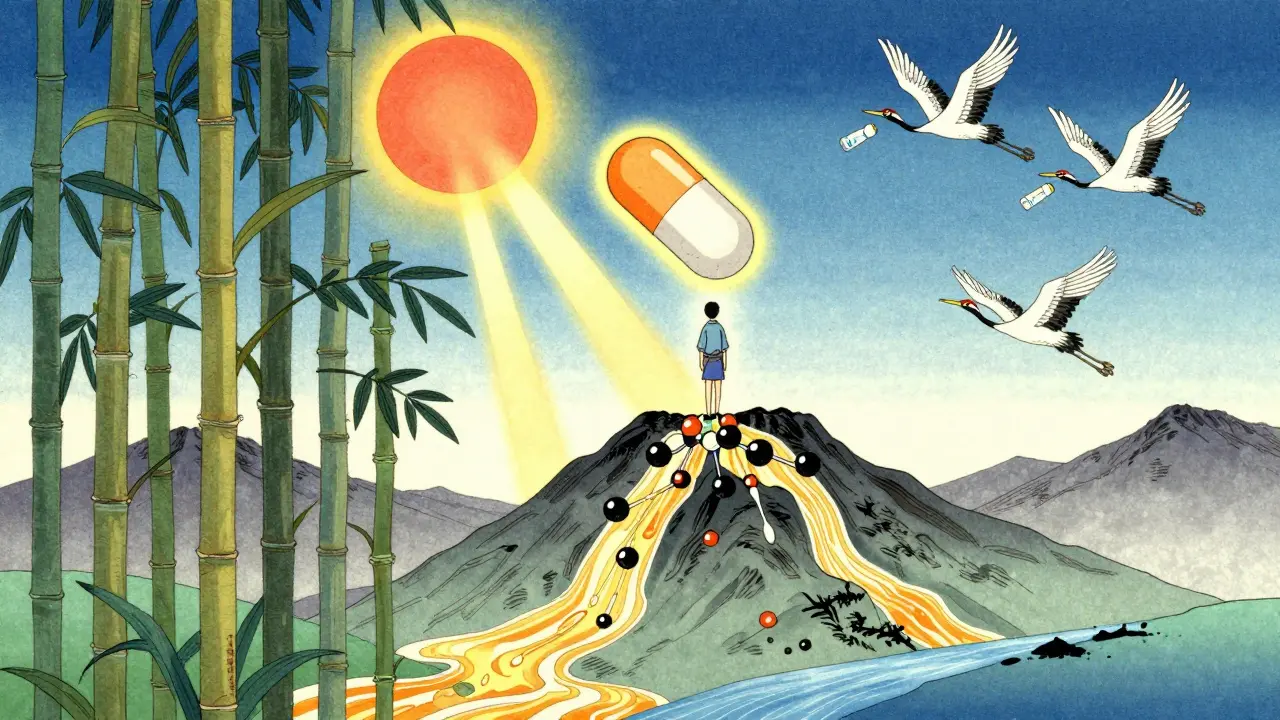
When you take corticosteroids like prednisone for asthma, arthritis, or an autoimmune flare, you’re getting powerful relief. But many people don’t know that these drugs can spike blood sugar-sometimes dangerously so. In fact, corticosteroids are one of the most common causes of high blood sugar in people who never had diabetes before. If you’re on these medications, especially at higher doses or for more than a couple of weeks, you need to know what’s happening in your body and how to manage it.
How Corticosteroids Turn Your Body Into a Sugar Factory
Corticosteroids mimic the body’s natural stress hormone, cortisol. That’s why they work so well at calming inflammation. But they also mess with how your body handles glucose. Think of it like this: your liver starts making extra sugar, your muscles stop absorbing it, your fat cells leak fatty acids into your bloodstream, and your pancreas gets confused about when to release insulin. All of this adds up to hyperglycemia. Research shows that glucocorticoids increase glucose production in the liver by 35-40%. They also block insulin from doing its job in muscle and fat tissue, cutting glucose uptake by about 30%. Meanwhile, fat breakdown rises by 25-30%, flooding your blood with fatty acids that make insulin resistance worse. And here’s the kicker-your pancreas actually produces less insulin. Studies show insulin secretion drops by 20-35% because corticosteroids interfere with the signals that tell beta cells to release insulin. This isn’t just insulin resistance. It’s a full-on metabolic storm.Who’s Most at Risk?
Not everyone on corticosteroids develops high blood sugar, but some people are far more likely to. The biggest risk factors are clear:- **Dose matters**: Taking 7.5 mg or more of prednisone daily increases your risk by more than 3 times. Dexamethasone is even stronger-just 0.75 mg daily can double your risk.
- **Duration**: Risk climbs 12% every week after the first two weeks of treatment.
- **Age**: If you’re over 50, your risk jumps 3 times.
- **Weight**: A BMI of 25 or higher raises your risk by 2.5 times.
- **Family history**: Having a close relative with diabetes increases your risk by 2.7 times.
- **Gestational diabetes**: If you had it during pregnancy, your risk is 4.3 times higher.
- **Kidney function**: An eGFR below 60 means your kidneys aren’t filtering well, and your risk triples.
One study found that for every extra 5 mg of prednisone you take, your risk of hyperglycemia goes up by 18%. That’s not a small increase. It’s a steep climb.
What Symptoms Should You Watch For?
Many people don’t feel anything at first. About 40% of cases are silent, caught only during routine blood tests. But when symptoms do show up, they’re often mistaken for side effects of the steroid itself.- **Thirst**: 65% of people with steroid-induced hyperglycemia report being constantly thirsty.
- **Frequent urination**: 72% say they’re going to the bathroom more than usual.
- **Fatigue**: 81% feel unusually tired, even if they’re sleeping fine.
- **Blurred vision**: 32% notice their eyesight gets fuzzy-this is a classic sign of high blood sugar.
- **Mood swings**: 67% report irritability or depression, which can be confused with steroid-induced emotional changes.
- **Increased hunger**: 85% of steroid users feel hungrier, but this isn’t just the drug-it’s your body trying to fuel itself when glucose can’t get into cells.
One Reddit thread with over 140 comments from people on long-term steroids revealed that 68% of them were never warned about this risk. That’s alarming. If your doctor doesn’t mention it, you need to ask.

How Doctors Monitor and Treat It
The good news? You don’t have to live with high blood sugar while on steroids. But you need a plan. Here’s what experts recommend:Monitoring: If you’re taking 20 mg or more of prednisone daily (or the equivalent), check your blood sugar at least twice a day-before breakfast and before dinner. Some doctors recommend checking 4-8 hours after your steroid dose, because that’s when blood sugar peaks.
When to start treatment: If your fasting blood sugar is above 140 mg/dL (7.8 mmol/L) or your random reading is above 180 mg/dL (10.0 mmol/L), it’s time to act. This isn’t optional. Uncontrolled hyperglycemia can lead to diabetic ketoacidosis or hyperglycemic hyperosmolar state-both can be life-threatening.
Insulin is the go-to: For most people, insulin works best. Basal insulin (long-acting) is often started first, especially if you’re on high-dose steroids. For every 10 mg increase in prednisone above 20 mg/day, insulin doses typically need to go up by 20%. Mealtime insulin (rapid-acting) is added if meals spike your numbers. A common starting ratio is 1 unit of insulin for every 5-10 grams of carbs.
Sulfonylureas? Use with caution: These pills stimulate insulin release, which sounds perfect. But here’s the trap: when you stop the steroid, your body’s insulin production doesn’t bounce back right away. If you’re still on a sulfonylurea, you can crash into dangerous low blood sugar. Studies show 37% of adverse events happen because of this timing mismatch.
GLP-1 agonists? Promising new option: New trials are showing GLP-1 drugs like semaglutide may be safer than insulin in some cases. They help your body release insulin only when glucose is high, lower appetite, and reduce hypoglycemia risk. Early data from the NIH’s GLUCO-STER trial shows a 28% drop in low blood sugar events compared to insulin.
What Happens When You Stop the Steroid?
Here’s the most important thing to understand: steroid-induced diabetes is usually temporary. Blood sugar levels typically return to normal within 3-5 days after stopping the medication. But many people don’t know this. They keep taking diabetes pills or insulin long after the steroid is gone, putting themselves at risk for hypoglycemia.One study found that 63% of patients continued diabetes treatment unnecessarily after steroid use ended. That’s dangerous. Always have a plan with your doctor for tapering off glucose-lowering meds as the steroid is reduced. Don’t assume you still need it.

Real-World Challenges
This isn’t just a theoretical problem. In hospitals, 45-60% of patients on high-dose steroids develop hyperglycemia. That leads to longer stays-on average, 2.3 extra days-and adds $2,800-$4,200 in costs per admission. In primary care, 35% of patients on long-term steroids aren’t getting any blood sugar checks at all.Even worse, many patients don’t get educated. A 2023 survey found that 70% of people on steroids had no idea their medication could cause diabetes. That’s a failure of communication. If you’re prescribed prednisone for more than a week, you deserve a clear plan: check your sugar, know the signs, and understand what to do if it rises.
The Future: Better Drugs and Better Tools
There’s hope on the horizon. In 2023, the European Association for the Study of Diabetes launched a mobile app called STEROID-Glucose. It tells you how much insulin to take based on your steroid dose and current blood sugar. In pilot studies, it cut hyperglycemic events by 32%.Researchers are also working on new steroid-like drugs that fight inflammation without wrecking your metabolism. One experimental compound, XG-201, reduced hyperglycemia by 65% compared to prednisone in early trials. It’s not available yet, but it shows we’re moving in the right direction.
And the problem is growing. Steroid use is rising-especially in cancer care. With CAR-T cell therapies, nearly 8 out of 10 patients develop severe hyperglycemia. The Endocrine Society predicts steroid-induced diabetes will become the third most common cause of secondary diabetes by 2030. We can’t afford to ignore this anymore.
Can corticosteroids cause diabetes in someone who’s never had it before?
Yes. Corticosteroids can trigger steroid-induced diabetes in people with no prior history of the condition. This happens in 10-30% of patients on high-dose therapy. It’s not the same as type 1 or type 2 diabetes-it’s a temporary metabolic disruption caused by the drug’s effect on insulin resistance and glucose production.
How long does steroid-induced hyperglycemia last after stopping the medication?
Blood sugar levels usually return to normal within 3-5 days after stopping corticosteroids. In some cases, especially with long-term use, it may take up to 2 weeks. But if your blood sugar stays high beyond that, you may have developed permanent type 2 diabetes and need ongoing treatment.
Is insulin the best treatment for steroid-induced high blood sugar?
For most people, yes. Insulin is the most effective and safest option because it directly counteracts the liver’s excess glucose production and muscle insulin resistance. Basal insulin is often started first, with rapid-acting insulin added for meal spikes. Oral medications like sulfonylureas carry a high risk of low blood sugar when the steroid is tapered, so they’re used cautiously.
Do I need to check my blood sugar if I’m on a low dose of prednisone?
If you’re on less than 7.5 mg of prednisone daily and have no risk factors (like obesity, age over 50, or family history), routine monitoring isn’t usually needed. But if you’re on 7.5 mg or higher, or have any risk factors, check your blood sugar at least twice a week. If you’re on 20 mg or more, daily monitoring is strongly recommended.
Can I avoid high blood sugar by eating low-carb while on steroids?
Diet helps, but it’s not enough. Even on a low-carb diet, corticosteroids force your liver to make more glucose and block insulin action. You can’t out-eat this effect. That’s why insulin or other medications are often necessary. Low-carb eating may reduce the amount of insulin you need, but it won’t prevent hyperglycemia on its own.

Darren Ramowski
My name is Calem Goodridge, and I am a pharmaceutical expert with a passion for educating others about medication and diseases. I have dedicated my career to researching and developing life-changing medical treatments. In my spare time, I enjoy writing articles and sharing my knowledge with the general public to help them make informed healthcare decisions. I am also an advocate for safe medication practices and believe that patient education is key to preventing adverse drug events. With my extensive experience in the pharmaceutical industry, I strive to make a positive impact on the lives of others through my writing.
Been on prednisone for my lupus for 3 years now. Never thought about blood sugar until my doc mentioned it last year. Started checking it twice a week - turns out I was hitting 180+ after doses. Didn’t feel different, just tired. Now I take a walk after my pill. Small thing, but it helps. No insulin needed yet. Just watchin’ it.
This is such an important post. I’m an endo nurse and I see this all the time - people get prescribed steroids, no one mentions glucose, then they show up in the ER with DKA. It’s preventable. Always ask for a glucose check before leaving the clinic if you’re on >7.5mg prednisone. Seriously. One conversation could save a hospitalization.
Look, I get it - science is cool. But let’s be real. The medical system is a money machine. They want you on insulin because it’s profitable. They don’t care if you’re just temporarily insulin resistant. They’ll sell you a glucometer, then a script for metformin, then a whole damn diabetes management app. And for what? You’re gonna stop the steroid in 3 weeks and your sugar goes back to normal. But now you’re labeled. Now you’re ‘pre-diabetic’. Now you’re a patient. I’ve seen it happen too many times. Don’t let them pathologize your temporary side effect.
Oh my god, I’m not alone. I was on 40mg of prednisone for a flare and my wife said I was ‘acting weird’ - moody, thirsty, always peeing. I thought it was the stress. Turns out my BG was 240. I didn’t even know what a glucometer was. Now I’m on basal insulin and I feel like a new person. But here’s the thing - my rheumatologist never said a word. I had to Google it. That’s criminal. They give you a pill and say ‘take this’ and hope you don’t die. No prep. No warning. Just ‘good luck’. This needs to be mandatory. Like, sign a form: ‘I acknowledge steroids may turn me into a diabetic for a few weeks’.
Thank you for this! 💪 I’m on 15mg prednisone and started checking my sugars daily. Low-carb helped a bit, but insulin was the real game-changer. My doc was hesitant, but I insisted. Now I’m stable. And yes - I’m still on insulin even though I’m tapering. I asked when to stop - they said ‘when your dose is under 5mg and sugars are normal for 3 days’. So I’m listening. You gotta be your own advocate.
Man, I wish I’d read this 6 months ago. My mom’s on long-term steroids for polymyalgia. She’s 68, overweight, family history of diabetes - total storm waiting to happen. I showed her this. She’s now checking her sugars twice a day, walking after meals, and her doc started her on basal insulin. She’s not ‘diabetic’ - she’s just managing a side effect. And guess what? Her joint pain is better too. Maybe because she’s not swimming in sugar. This isn’t fear-mongering. It’s just… basic care.
Y’all are overthinking this. Look - steroids = sugar bomb. That’s it. You don’t need a PhD to get it. If you’re on more than 7.5mg, check your sugar. If it’s over 140 fasting, talk to your doc. If you’re scared of needles - get a glucometer first. Then decide. Don’t wait until you’re dizzy and peeing every 20 minutes. I’ve been there. It’s not fun. I’m on 10mg now. Check every morning. Walk after lunch. Drink water. That’s it. No drama. No apps. Just do the thing.
in america we got so many drugs and no one tells you shit. i took prednisone for my back and i was so damn thirsty i drank 3 gallons of water a day. i thought i was dehydrated. turns out i was diabetic for a week. no one warned me. now my doc says i have prediabetes. but i stopped the steroid 3 months ago. my sugar is normal. so why do i still have to take metformin? i think they just wanna sell pills. this whole system is broke.
It is an absolute travesty that the medical establishment continues to treat corticosteroid-induced hyperglycemia as an afterthought rather than a predictable, quantifiable, and entirely preventable metabolic catastrophe. The data is unequivocal: a 35-40% increase in hepatic glucose output, a 30% reduction in peripheral glucose uptake, and a 20-35% suppression of insulin secretion - all mechanistically documented. And yet, we allow patients to be discharged on high-dose glucocorticoids without a single glucose measurement, without a single conversation, without even a pamphlet. This is not negligence. This is systemic abandonment. We are not treating patients. We are managing risk exposure. And for what? Cost-cutting? Liability avoidance? The ethical breach here is not merely professional - it is moral.
so i was on 20mg prednisone for 6 weeks and my doc never said a word. i started feeling like a zombie, always hungry, peeing every hour. i checked my sugar on a friend’s glucometer - 210. i panicked. called my doctor. he said ‘oh, that’s normal’. i said ‘normal? i’ve never had diabetes’. he said ‘well, you probably had it already’. i didn’t. i was healthy. now i’m on insulin. and they won’t let me stop it. even though i’ve been off steroids for 2 months. my sugars are 85. they say ‘better safe than sorry’. i say ‘better stop being lazy and reevaluate’. this isn’t medicine. it’s habit.